How to Make Extra Income with Crypto Referrals in 2026

Crypto referral programs are one of the few ways to earn from crypto without putting your own money at risk. Instead of trading or staking, you share a link, and when the people who use it sign up and transact, you earn a cut. Some programs pay a one-time bonus. The better ones pay you a recurring commission every time your referrals spend, deposit, or trade, which is where "referral income" stops being pocket change and starts compounding.
This guide covers how crypto referral programs actually work, the realistic numbers behind them, the main program types worth your time in 2026, and, honestly, how much effort it takes to earn a meaningful amount. No hype, no "passive income while you sleep" promises. Just the mechanics and the math.
A crypto referral program rewards you for bringing new users to a crypto product: an exchange, a wallet, a crypto debit card, or a payments app. You get a unique referral link or code. When someone signs up through it and meets the program's condition (usually a first deposit, a trade, or ongoing spending), the platform pays you a reward and often gives the new user a bonus too.
There are two payout structures, and the difference matters enormously:
- One-time bonus: You earn a fixed reward, say $10 or $25, the first time your referral does something (deposits, trades, or spends a minimum amount). Simple, but it caps out. One referral, one payout.
- Recurring commission: You earn a percentage of what your referral spends or pays in fees every time they transact, for as long as they stay active. One good referral can pay you for months. This is the model that actually builds income.
The best crypto referral programs use the recurring model, because it aligns your incentive with bringing in people who genuinely use the product rather than sign up and vanish. That is also what search engines and the platforms themselves reward: real users, not throwaway accounts.
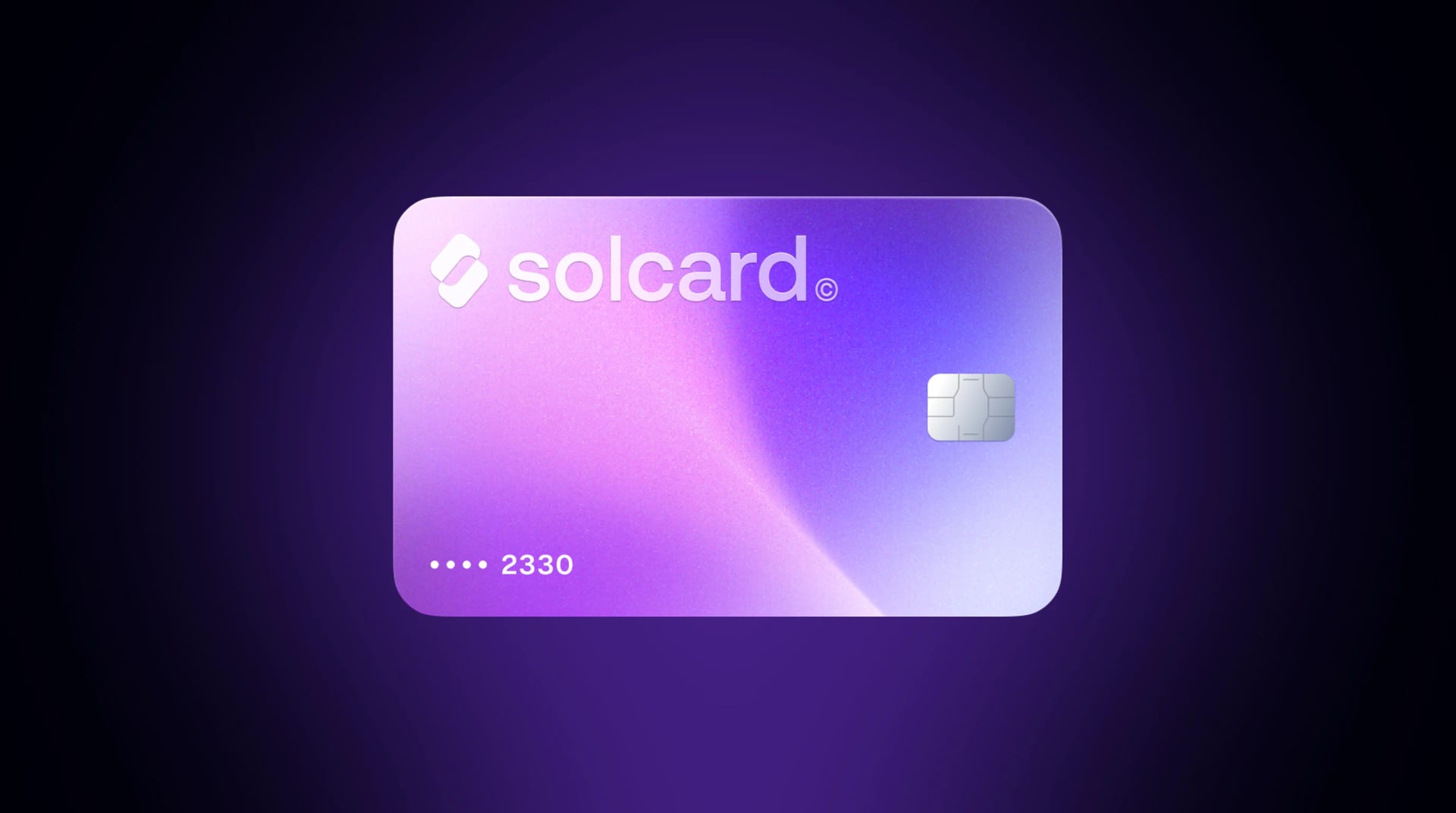
Crypto card programs are among the strongest referral earners because spending is recurring by nature. Someone who loads a crypto debit card doesn't do it once. They top it up and spend on it week after week. If the program pays you a percentage of each deposit, your commission recurs with their spending.
SolCard pays referral commission on the deposits your referrals make, not just on their signup. Here is the mechanism:
- Get your link. Every SolCard account has a referral dashboard with a unique code and link (it tags anyone who signs up through it).
- Share it. Send it to friends, post it, or embed it in content. When someone creates a SolCard account through your link, they are permanently attributed to you.
- Earn on every deposit. SolCard charges a 5% top-up fee on non-Platinum cards. Your referral commission is paid as a share of that fee, on every deposit your referrals make, so your earnings scale with how much the people you refer actually use their card.
- Earn on issuance too. You also receive a per-card commission when a referral opens a card.
- Track and withdraw. Your referral dashboard shows live earnings and an earnings chart, and you can withdraw your commission balance.
Your exact cut depends on your referral tier: higher-volume referrers earn a larger share of the fee. Because the commission is a slice of the deposit fee rather than a fixed bounty, a handful of active referrals who reload their cards regularly is worth more than dozens of one-and-done signups.
The honest version: card referral income tracks the spending of the people you bring in. Refer ten people who each top up $200 a month and keep using their card, and you have built a small recurring stream. Refer ten people who sign up and never fund a card, and you have earned nothing. Quality of referral beats quantity every time.
Every major exchange runs a referral program, and they are the highest-volume option because trading fees are large and frequent. The standard structure is a percentage of the trading fees your referrals pay, typically in the 20-40% range, sometimes higher for volume affiliates.
- Coinbase and most large exchanges pay a share of fees (and historically a signup bonus after the referral's first qualifying trade).
- Binance and other high-volume venues run tiered affiliate programs that pay a percentage of every trade your referrals make, sometimes for life.
- Kraken, Bybit, and OKX run similar fee-share programs.
The catch: exchange referrals only pay when your referrals trade actively, and trading volume is volatile. A referral who day-trades earns you far more than one who buys once a year. Exchange programs reward you for bringing in traders, which is a narrower audience than bringing in people who just want to spend crypto.
Beyond cards and exchanges, individual crypto products run their own referral programs, and some pay generously per order. SolCard's Claude with Crypto referral program pays a 30% commission on every Claude with Crypto order placed through your link, a high per-order rate because it is tied to a concrete purchase rather than a fee slice.
This is a good fit if your audience is crypto-native and interested in paying for AI tools with crypto: developers, AI enthusiasts, and people who want to buy software without a traditional card. A single 30% order commission can outweigh many small fee-share payouts.
The people who earn real money from crypto referrals rarely just spam a link. They build something people find, and the referral link rides along inside it. This is the affiliate model, and it compounds because the content keeps working after you publish it.
- Write comparisons and guides. A genuinely useful "best crypto cards" or "how to pay for X with crypto" post attracts people already looking to sign up. Your referral link converts a fraction of them, continuously.
- Make short video or social content. Wallet setups, card unboxings, "how I pay for Netflix with crypto" walkthroughs: practical demonstrations convert far better than promises.
- Be genuinely helpful in communities. Answering real questions in a subreddit or Discord (where allowed) builds the trust that makes anyone click a referral link at all.
This approach takes real work, but it is the only one that scales beyond your immediate friends, and it is the model that survives platform crackdowns on low-effort link spam.
Here is how the main crypto referral models stack up on what actually matters: how you get paid and how sustainable the income is.
| Program type | Typical payout | Recurring? | Best for |
|---|---|---|---|
| Crypto card (e.g. SolCard) | Share of the deposit fee + per-card commission | Yes -- every top-up | People who spend crypto day to day |
| Exchange / trading | ~20-40% of trading fees | Yes -- while they trade | Audiences that actively trade |
| Product order (e.g. Claude with Crypto) | 30% per order | Per order | Crypto-native / AI audiences |
| One-time signup bonuses | Fixed ($10-$25) | No | Quick wins, low ceiling |
The pattern is clear. The models that pay a percentage of ongoing activity are the ones that turn into income. Fixed signup bonuses are fine for a quick win but have a hard ceiling.
Honest math on the card model, since it is the most sustainable. Assume you refer 15 people who become genuine users, each topping up an average of $250 per month on a non-Platinum card:
- Total monthly deposits from your referrals: 15 × $250 = $3,750
- Deposit fees generated (5%): $187.50/month
- Your commission is a share of that fee, set by your referral tier, so your monthly earnings are a slice of $187.50, and they recur as long as those 15 keep spending.
Scale the number of active referrals or their spending, and the stream grows proportionally. The example isn't about a specific dollar figure, which your tier and your referrals' behavior set. It is about the shape: recurring, tied to real usage, and compounding as you add active users. This is why bringing in 15 people who actually spend beats bringing in 150 who don't.
Getting the link is the easy part. Earning from it is the work. What consistently converts:
- Lead with a real problem you solved. "Here's how I stopped paying 3% to withdraw from my exchange" beats "sign up with my link." People act on solutions, not asks.
- Show, don't tell. A screenshot of your actual card working, a short clip of a real purchase: proof you use the product is the single biggest trust signal.
- Target intent. Share where people are already deciding: a thread asking "which crypto card should I get," a comparison article, a video on spending crypto without selling it.
- Disclose honestly. Say it is a referral link. It is legally required in most places and it builds the trust that makes people click anyway.
- Be patient. Referral income compounds slowly. The content and relationships you build this month pay out over the following months.
Yes. In most jurisdictions, referral commissions and affiliate rewards are taxable income, not a tax-free gift. In the United States, the IRS treats crypto received as payment, including rewards and commissions, as ordinary income at its fair market value on the day you receive it. If you later spend or sell that crypto, a second capital-gains event applies to any change in value.
Practical implications:
- Record the value when you earn it. Note the USD value of each commission on the date it hits your balance. That is your income figure and your cost basis.
- Stablecoin commissions are simplest. If you are paid in USDC or USDT and hold it at its $1.00 peg, there is income to report but little or no capital gain to track.
- Keep records. Starting in 2026, US brokers issue Form 1099-DA for digital-asset transactions, so referral and reward income is increasingly visible to tax authorities. Assume it is reportable.
This is general information, not tax advice. Rules vary by country, so check your local requirements or a professional.
If you want a referral program built around spending rather than trading, a broader and stickier audience, here is the quickest path:
- Get a SolCard. Choose Virtual (no KYC, issued in ~30 seconds) or Platinum (KYC, Apple Pay / Google Pay support).
- Open your referral dashboard to grab your unique link and code.
- Share it where it fits: with friends who already hold crypto, or inside genuinely useful content about paying with crypto.
- Track your earnings and withdraw your commission balance as it accrues.
Because SolCard commission rides on the 5% deposit fee of every top-up, your income grows with how much your referrals actually use their cards, and topping up over Solana keeps their costs low enough that regular spending stays practical. For the full picture on how SolCard compares to other options your referrals might weigh, see our best crypto debit cards guide.
Yes, but the amount depends entirely on the program and your audience. Recurring programs, whether crypto cards that pay a share of every deposit or exchanges that pay a cut of trading fees, can build a real monthly stream if you refer people who actually use the product. One-time signup bonuses are capped and won't amount to much on their own. It is genuine income, not a get-rich-quick scheme, and it rewards effort and trust over spammed links.
A referral bonus is a one-time fixed reward (e.g. $20) paid when your referral first signs up or transacts. A referral commission is an ongoing percentage of what your referral spends, deposits, or pays in fees, and it recurs every time they transact. Commission-based programs build far more income over time because a single active referral keeps paying you, whereas a bonus pays once.
SolCard pays referral commission as a share of the 5% top-up fee charged on non-Platinum cards, on every deposit your referrals make, plus a per-card commission when they open a card. Your exact percentage depends on your referral tier. Separately, the Claude with Crypto program pays 30% commission per order. You track earnings and withdraw your balance from your referral dashboard.
In most countries, yes. Referral and affiliate commissions are taxable income at their fair market value when you receive them. In the US, the IRS treats crypto rewards as ordinary income, and spending or selling that crypto later can trigger an additional capital-gains event. Being paid in stablecoins simplifies the tracking since there is little price movement to report. Keep records of the value of each commission on the date you earn it.
Lead with a real problem you solved, show proof you actually use the product (screenshots, short clips), and share where people are already deciding what to sign up for: comparison threads, guides, and communities. Always disclose that it is a referral link. Low-effort link spam converts poorly and gets removed; genuinely useful content compounds and keeps earning long after you publish it.