Western Union Stablecard: How the USDPT Visa Card Works
Western Union's Stablecard is a USDPT-secured Visa card live in 37 markets. How it works, what WU publishes on fees and KYC, and the alternatives.
In this article
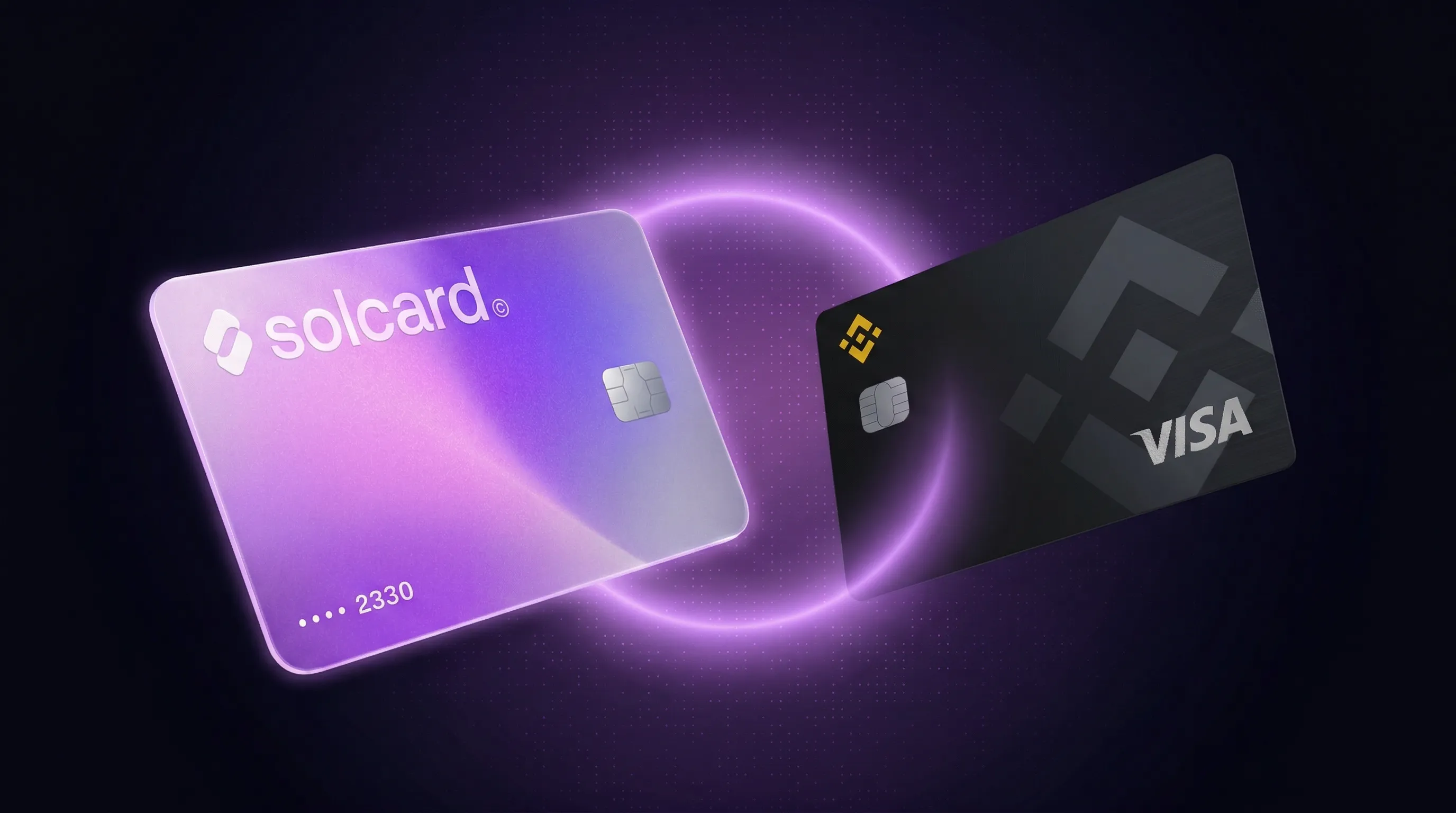
Western Union's Stablecard is a Visa card that spends USDPT, a US dollar stablecoin issued by Anchorage Digital Bank on Solana. Western Union launched it with card issuer Rain on August 4, 2026, in 37 markets, and is targeting 60+ markets by the end of the year, per Western Union's press release. You fund it with USDPT or by redirecting a Western Union transfer sent for cash pickup, and identity verification is required. Western Union's public pages say fees apply but don't list the amounts or the 37 countries. This guide covers how the Western Union Stablecard works, what is and isn't published about its costs, and when a prepaid crypto card fits better.
Western Union describes Stablecard as "a digital wallet and USDPT-backed Visa secured credit card designed to enable consumers to hold, move and spend U.S. dollar value globally," per its press release.
The key facts from Western Union's own pages:
- Network: Visa. The App Store listing says you can "Use your card anywhere Visa is accepted," per Apple's App Store.
- Balance asset: USDPT only. The listing calls the card "a Visa® spend card that lets you hold and use US Dollar Payment Token (USDPT™)."
- Issuer: Third National, per the App Store listing.
- Form: a virtual card issued right after approval, plus an optional physical card that is mailed "for a fee," per Western Union's Stablecard FAQ.
- Mobile wallets: the virtual card can be added to Apple Pay or Google Pay, per the FAQ.
- Markets: 37 at launch, with 60+ targeted by year-end, per the press release. The release doesn't name the countries.
USDPT is a US dollar stablecoin issued by Anchorage Digital Bank on the Solana blockchain, which Western Union says is redeemable 1:1 for US dollars and fully backed by reserves, per the press release. Western Union launched it in May, and The Defiant reported $7.4 million in circulation in its coverage of the card's launch.
The App Store listing adds two disclosures: USDPT is "not issued, backed, approved, or guaranteed by the US government," and it "is not insured by the Federal Deposit Insurance Corporation (FDIC) or any other US government agency," per Apple's App Store. Like any stablecoin, its value depends on the issuer's reserves; our explainer on what happens to a card balance if a stablecoin depegs covers that risk.
Stablecard doesn't spend a preloaded fiat balance. Western Union's FAQ says "The card is secured by the cardholder's deposit of US Dollar Payment Token (USDPT) as collateral" and that it "is not a prepaid card or bank account," per the Stablecard FAQ. The press release calls it a "secured credit card."
In practice, per the same FAQ:
- You hold USDPT in the Stablecard app. Your spending is capped by the USDPT you have deposited as collateral.
- You spend with the Visa card. Online, in-store, or through Apple Pay or Google Pay.
- Spending and ATM withdrawals reduce your USDPT balance. The FAQ says cash withdrawals reduce the USDPT balance and may be subject to withdrawal limits.
- No interest. The FAQ says the card offers no interest and doesn't represent a claim against FDIC-insured funds.
Western Union says you can "Get started with no credit check, no minimum balance, and no hidden fees," per the FAQ.
The OKX Card in the US uses a similar collateral model with stablecoins; our OKX Card guide covers how that one repays purchases.
Western Union's FAQ describes two ways to add money, per the Stablecard FAQ:
- Transfer USDPT in from another digital asset wallet, including compatible exchange wallets.
- Redirect a Western Union transfer. An incoming transfer is converted from local currency to USDPT. The FAQ says "This is only applicable for money transfers originally sent for cash pickup."
The press release also says you can "send and receive funds to and from compatible digital asset wallets and exchanges," per Western Union.
The FAQ we checked describes USDPT deposits only. It doesn't mention depositing USDT, USDC or SOL. If your crypto is in one of those, you'd need to get USDPT first or use a card that takes them directly.
You can withdraw local currency at Visa ATMs, subject to withdrawal limits, or cash out to yourself through Western Union and collect cash at a location you choose, per the FAQ. The FAQ says cash pickup through Western Union carries fees. For how ATM fees stack up on crypto cards in general, see our guide to crypto card ATM withdrawals.
Western Union's public pages confirm that fees exist but don't list the amounts. Here is what each page says:
| Fee | What Western Union publishes | Source |
|---|---|---|
| Card use | Fees apply; amounts in the Terms and Conditions | Stablecard FAQ |
| ATM withdrawals | "Fees may apply, including ATM withdrawal fees" | App Store listing |
| Foreign transactions | "Foreign transaction fees may apply" | Stablecard FAQ |
| Physical card | Mailed "for a fee" | Stablecard FAQ |
| Cash pickup via Western Union | Fees apply | Stablecard FAQ |
| Credit check / minimum balance | None | Stablecard FAQ |
The FAQ says all fees are listed in the Terms and Conditions. Read that fee schedule in the app before you load money, especially the foreign transaction fee. If the card's balance is in US dollars and you shop in your local currency, that fee may apply to every local purchase. Our guide to crypto card foreign transaction fees explains how those charges add up.
Identity verification is required. The FAQ says you must provide personal information and documents for anti-money laundering, sanctions screening and customer identity checks, which Rain or its authorized providers carry out, per the Stablecard FAQ.
Availability "depend[s] on geographic and regulatory requirements," per the App Store listing. Western Union says the 37 launch markets include places "where local currency is not stable and demand for stablecoins is already visible," per its press release, but it doesn't publish the list. The practical check is to download the app and see whether it lets you apply from your country.
SolCard is built differently. It is a prepaid Visa / Mastercard card: you top up from a crypto wallet with USDT, USDC, SOL or other tokens on Solana, Ethereum, Base, Polygon and more, and spend the resulting balance. It needs no bank account and no credit check.
| Western Union Stablecard | SolCard Virtual | SolCard Platinum | |
|---|---|---|---|
| Model | USDPT held as collateral for a secured Visa card | Prepaid: top up, then spend | Prepaid: top up, then spend |
| Funding | USDPT, or a Western Union transfer sent for cash pickup | USDT, USDC, SOL and other tokens on Solana, Ethereum, Base, Polygon and more | Same as Virtual |
| Network | Visa | Visa / Mastercard | Visa / Mastercard |
| Card fee | Physical card "for a fee" | $10 issuance | $10 per card |
| Top-up fee | Not published | 5% | 0% |
| Per transaction | Card-use fees apply; amount not published | $0.30 | $0.30 |
| FX | "Foreign transaction fees may apply" | 1-2% spread | 0-1.5% spread |
| Apple Pay / Google Pay | Yes | No | Yes |
| Physical card | Yes, for a fee | No | Yes |
| Identity verification | Required | Not required; $10,000 monthly limit | Required |
| Countries | 37 markets, list not published | Most countries; US served for Virtual only | Most countries; not offered in the US |
Sources: Western Union press release, Stablecard FAQ, App Store listing, SolCard fees, SolCard help-centre fee breakdown for the $0.30 per transaction.
Say a relative wants to send you $300 and you want to spend it by card.
Through Stablecard: the sender sends a Western Union transfer for cash pickup, and you redirect it into Stablecard, where it converts to USDPT. Stablecard's card-use and foreign transaction fees aren't published on its public pages, so the total, including what Western Union charges the sender for the transfer, can't be worked out from those pages. The advantage is that the sender doesn't need crypto at all.
Through SolCard: the sender needs to hold crypto and sends you $300 in USDT or USDC, and you top up your card. On Platinum, the 0% top-up fee puts the full $300 on the card. On Virtual, the 5% top-up fee leaves about $285. Each purchase then costs $0.30, plus a 1-2% spread on Virtual (0-1.5% on Platinum) when you pay in a currency other than US dollars. The network fee for the transfer comes on top, and it depends on the chain used.
The comparison comes down to who holds the money first. If your family already uses Western Union and doesn't hold crypto, Stablecard fits that habit. If the money already arrives as USDT or USDC, a card that takes those directly saves a conversion step.
- Your crypto isn't USDPT. Stablecard's FAQ describes USDPT deposits only. SolCard takes USDT, USDC, SOL and other tokens across several networks. Our guide to USDT cards covers the options if Tether is what you hold.
- You want the fees in writing before you sign up. SolCard publishes its top-up, issuance and FX figures on its fees page and the $0.30 per-transaction fee in its help centre.
- You want a virtual card with a set monthly cap. The Virtual tier needs no ID up to its $10,000 monthly limit. Stablecard requires verification for every applicant.
SolCard has real limits too. Its restricted countries include Egypt, Nigeria, South Africa and Ukraine, and Hong Kong is blocked at signup. The Virtual tier's 5% top-up fee is a big cost on small amounts, and Apple Pay, Google Pay and the physical card are Platinum-only. Prepaid cards also often fail hotel and car-rental deposit holds, so use them for purchases paid in full. You can see the Virtual card on the virtual cards page, and other card matchups on /compare.
Stablecard fits people who already receive money through Western Union and want to hold and spend US dollar value without a bank account. It has Apple Pay and Google Pay, a Visa card from the moment you're approved, and Western Union's cash-pickup network as a way out. The gaps are the fee schedule, which sits in the Terms and Conditions rather than on its public pages, the unpublished country list, and the fact that it spends only USDPT.
If you already hold USDT, USDC or SOL, SolCard lets you top up from those directly: 0% on Platinum, or 5% on the Virtual tier. Check both providers' country lists before you sign up. For a wider view of how remittances are moving to stablecoins, see our crypto remittance statistics.
A digital wallet and Visa card secured by USDPT, a US dollar stablecoin issued by Anchorage Digital Bank on Solana. Western Union launched it with Rain on August 4, 2026, per its press release.
Western Union's FAQ says it "is not a prepaid card or bank account" and is secured by your USDPT deposit as collateral, per the Stablecard FAQ. The press release calls it a "secured credit card." It needs no credit check and pays no interest.
Western Union's public pages say fees apply for card use, ATM withdrawals, a physical card and foreign transactions, and that the amounts are in the Terms and Conditions, per the FAQ. They don't list the amounts.
It launched in 37 markets, with 60+ targeted by the end of 2026, per Western Union. Western Union doesn't publish the list; the app shows whether you can apply from your country.
The FAQ describes funding with USDPT from another wallet or exchange, or with a redirected Western Union transfer sent for cash pickup. It doesn't mention USDT or USDC deposits, per the Stablecard FAQ.
Yes. Applicants must provide personal information and documents for identity, anti-money laundering and sanctions checks, which Rain or its providers carry out, per the FAQ.
No. The App Store listing says USDPT "is not insured by the Federal Deposit Insurance Corporation (FDIC) or any other US government agency," per Apple's App Store.