Pay Scaleway with Crypto
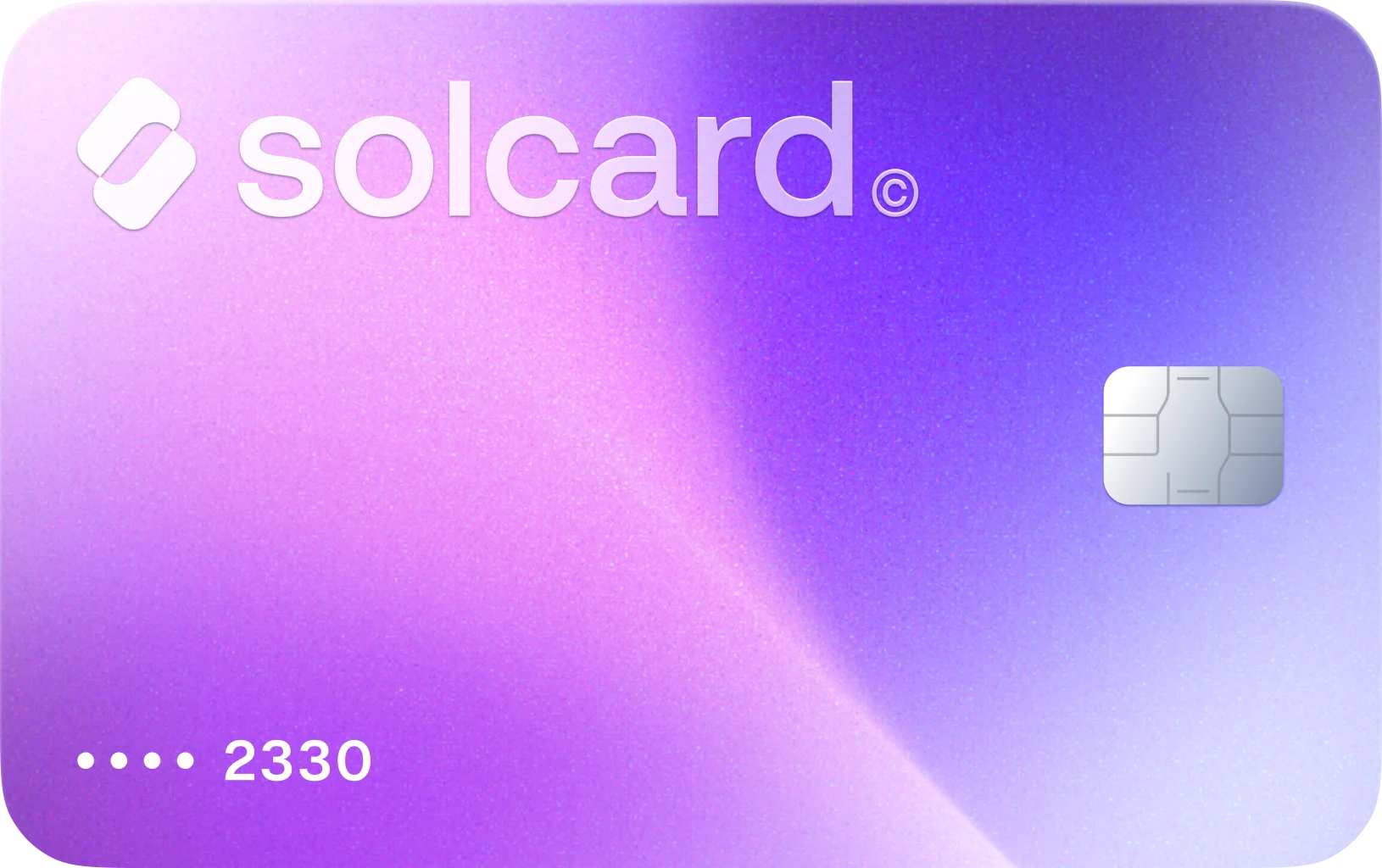
Use SolCard for eligible Scaleway console charges, month-end cloud invoices, and Web Hosting renewals while Scaleway keeps billing inside its standard card flow.
43% of buyers purchase again at Scaleway · Based on real card transactions
How to Use Crypto for Scaleway Console Billing
Get Your SolCard
Sign up for SolCard in minutes. Get your virtual card instantly or order a physical card delivered to your door.
Load Your Crypto
Deposit SOL, USDC, USDT, or SOLC directly from your crypto wallet across 9 supported blockchain networks.
Add the card in Scaleway's billing console
Open Billing > Payment and billing, add the card to your Organization, complete the 3D Secure validation, and use it for new orders or the next monthly invoice. Scaleway says a temporary EUR1 authorization is placed when a card is registered.
Scaleway Billing Details Worth Knowing Before You Pay
Scaleway's pricing catalog spans Compute Instances, GPU workloads, Elastic Metal, Object Storage, Block Storage, Managed Databases, Load Balancers, Domains, Web Hosting, and Transactional Email. SolCard is most relevant when you want one crypto-funded payment method for the card-billed parts of that console-based stack.
Scaleway says Public Cloud services are pay as you go, with the invoice calculated at the end of each calendar month from hourly resource usage and payment initiated in the first days of the next month. That makes the real payment moment the monthly invoice, not a single checkout page.
On Scaleway, a Compute Instance stops billing when it is powered off, but Elastic Metal keeps billing until the server is deleted, Flexible IPs bill while the reservation remains open, and volumes or snapshots bill until they are deleted. SolCard is useful when your cost is ongoing infrastructure allocation rather than a one-time order.
Scaleway does not bill every service the same way. Public Cloud is postpaid, while Web Hosting and Dedibox subscriptions are prorated for the first month and then billed in full and in advance from the second month onward.
Scaleway's Advanced, Business, and Enterprise support plans can materially change the monthly bill because the company charges whichever is higher between a fixed monthly fee and a percentage of net spend. That matters if you run production workloads and buy support alongside infrastructure.
Scaleway requires a card before you can set up SEPA, runs a 3D Secure check plus a temporary EUR1 authorization when the card is added, and says virtual or prepaid cards are not accepted. The same card can also only be registered once across all Organizations.
Fund SolCard With Crypto Before Scaleway Charges Your Account
About Scaleway
Scaleway is a European cloud provider selling Compute Instances, Elastic Metal bare metal servers, Object Storage, Block Storage, Managed Databases, Kubernetes, domains, web hosting, transactional email, and paid support plans. Real Scaleway charges usually come from the monthly invoice generated from console usage, though Web Hosting and Dedibox subscriptions are prorated for the first month and billed in advance from the second month onward. Scaleway's billing docs list cards and SEPA rather than native crypto checkout, so SolCard is the crypto-funded route for eligible Scaleway purchases and invoices handled through its normal payment flow.
Scaleway Billing and Crypto FAQ
Scaleway's billing documentation lists cards and SEPA, but it does not list a native cryptocurrency checkout option. SolCard is the crypto-to-card route if you want to fund a payment with digital assets first, and it supports 4 tokens across 9 blockchain networks before Scaleway sees a card payment.
What Users Say About SolCard for Scaleway
No reviews yet. Be the first to try SolCard at Scaleway.
Supporting guides related to Scaleway
Use these guides to branch from Scaleway into adjacent merchant workflows, category-level comparisons, and broader SolCard payment explainers.
How to Pay for Hostinger Web Hosting with Crypto: A Complete Guide for 2026
Pay for Hostinger hosting with crypto using CoinGate or a crypto-funded virtual card. Step-by-step guide with real costs, plan breakdowns, and tips.
Read guideBest Crypto Payment Gateways for Businesses in 2026
Compare the best crypto payment gateways for businesses in 2026 -- features, fees, supported coins, and integration options for accepting crypto.
Read guideStripe Crypto Payments: A Complete Guide to Web3 Integration
Stripe crypto payments explained -- from stablecoin checkout and fiat-to-crypto onramps to USDC payouts and web3 integration for businesses.
Read guideWeb3 Payments Explained: The Future of Spending Crypto
A comprehensive guide to web3 payments — how decentralized payment infrastructure works, key platforms, and why web3 is reshaping how we spend crypto in 2026.
Read guideUsers who shop at Scaleway also shop at

Buy on Anthropic with Crypto
Use SolCard to pay Anthropic for Claude subscriptions, Team seats, and API credits with SOL, USDC, USDT, and SOLC across 9 blockchain networks.
Learn more
Buy on OpenAI with Crypto
Use SolCard to pay for ChatGPT Plus, Pro, Business, and OpenAI API usage with SOL, USDC, USDT, and SOLC across 9 blockchain networks.
Learn more
Buy on Cursor with Crypto
Use your SolCard crypto debit card to pay for Cursor with SOL, USDC, USDT, and SOLC across 9 blockchain networks. Cover Pro, Pro+, Ultra, or Teams on Cursor's card billing flow.
Learn more