How to Pay for Higgsfield with Crypto: Credit Packs and Plans in 2026

There are two ways to pay for Higgsfield with crypto: fund a Visa or Mastercard with stablecoins and use it on Higgsfield's normal checkout, or use Stripe's native USDC option on the orders where Higgsfield surfaces it. The card route is the one that works everywhere, on every plan, and on renewals.
Higgsfield bills through Stripe. In January 2026, Stripe announced that Higgsfield accepts stablecoin payments alongside cards and regional methods like Pix, Kakao Pay, and WeChat Pay. That is real but narrow: USDC only, capped per transaction, and Stripe's recurring stablecoin billing is still in limited preview. Most people keeping funds on-chain still end up at a card field.
Below: current pricing, what each crypto route costs on a $59/month Plus plan, the checkout steps, and the decline patterns worth knowing before you burn attempts.
Higgsfield sells two things at once: a subscription that refills a monthly credit pool, and one-off packs for when you run it dry. Both hit the same card. Individual plans, per higgsfield.ai/pricing:
| Plan | Billed monthly | Billed annually | Monthly credits |
|---|---|---|---|
| Starter | $19/mo | -- | 270 |
| Plus | $59/mo | $47/mo | 1,200 |
| Ultra | $129/mo | $99/mo | ~3,000 |
Two caveats on that table. Higgsfield's public pricing page did not surface an annual price for Starter when we checked, so fund against the monthly figure. And the page lists individual plans only -- if you need seats for a studio or agency, the number has to come from Higgsfield directly rather than from a published tier, and the third-party trackers that quote seat pricing disagree with each other and with the live page.
Credit packs sit outside that table. Higgsfield sells one-off top-up credits at roughly $5 per 100 credits, and several third-party pricing trackers report that purchased credits expire after about 90 days. We have not found that expiry confirmed in a first-party Higgsfield source, so treat the 90 days as unverified and watch your own balance rather than planning a shoot around it.
Three details change how you fund a card. Credits do not roll over, so heavy users buy packs mid-cycle. Annual billing is one large upfront charge: Plus at $47/month is $564 on day one, which Higgsfield's own page frames as $144 saved against monthly billing, and Ultra at $99/month is $1,188. And Higgsfield's pricing page states that prices exclude VAT and local taxes, which are calculated at checkout, so the amount that actually hits your card can be materially higher than the sticker. In a 20% VAT jurisdiction a $59 Plus charge authorizes at about $71, and the $564 Plus annual charge at about $677. Higgsfield has also repriced its tiers more than once during 2026, so check the live pricing page before you top up.
No wallet connect on the subscription flow. The billing screen is a Stripe payment form. There is no connect-wallet button and no on-chain invoice for a plan upgrade.
The stablecoin option is not universal. Stripe's stablecoin checkout is USDC only, across a limited set of networks, with a per-transaction ceiling, and whether it appears depends on the order type. Fine for a one-off credit pack. Not reliable for a renewing subscription.
Regional methods do not help crypto holders. Pix, Kakao Pay, Naver Pay, and WeChat Pay all assume a local bank account.
Prepaid BIN filtering. Stripe risk rules on high-volume AI platforms are tuned against card-testing. Some prepaid and virtual BINs get screened even when the card is funded.
3D Secure step-up on larger charges. An annual Ultra plan at $1,188 is far likelier to trigger authentication than a $19 Starter renewal. A card that cannot complete 3DS fails that charge.
Credits do not roll over, so failed payments cost output. A declined renewal means your pool does not refill, and purchased packs are widely reported to age out after about 90 days.
Tax is added at checkout. Higgsfield's own footnote says prices exclude VAT and local taxes. If you fund a card to the sticker price, a VAT jurisdiction will decline you on the first attempt.
This covers every Higgsfield plan, every credit pack, monthly and annual, from any country Visa and Mastercard reach. A crypto debit card converts stablecoins to fiat at the point of sale, so Higgsfield's Stripe checkout sees an ordinary card authorization.
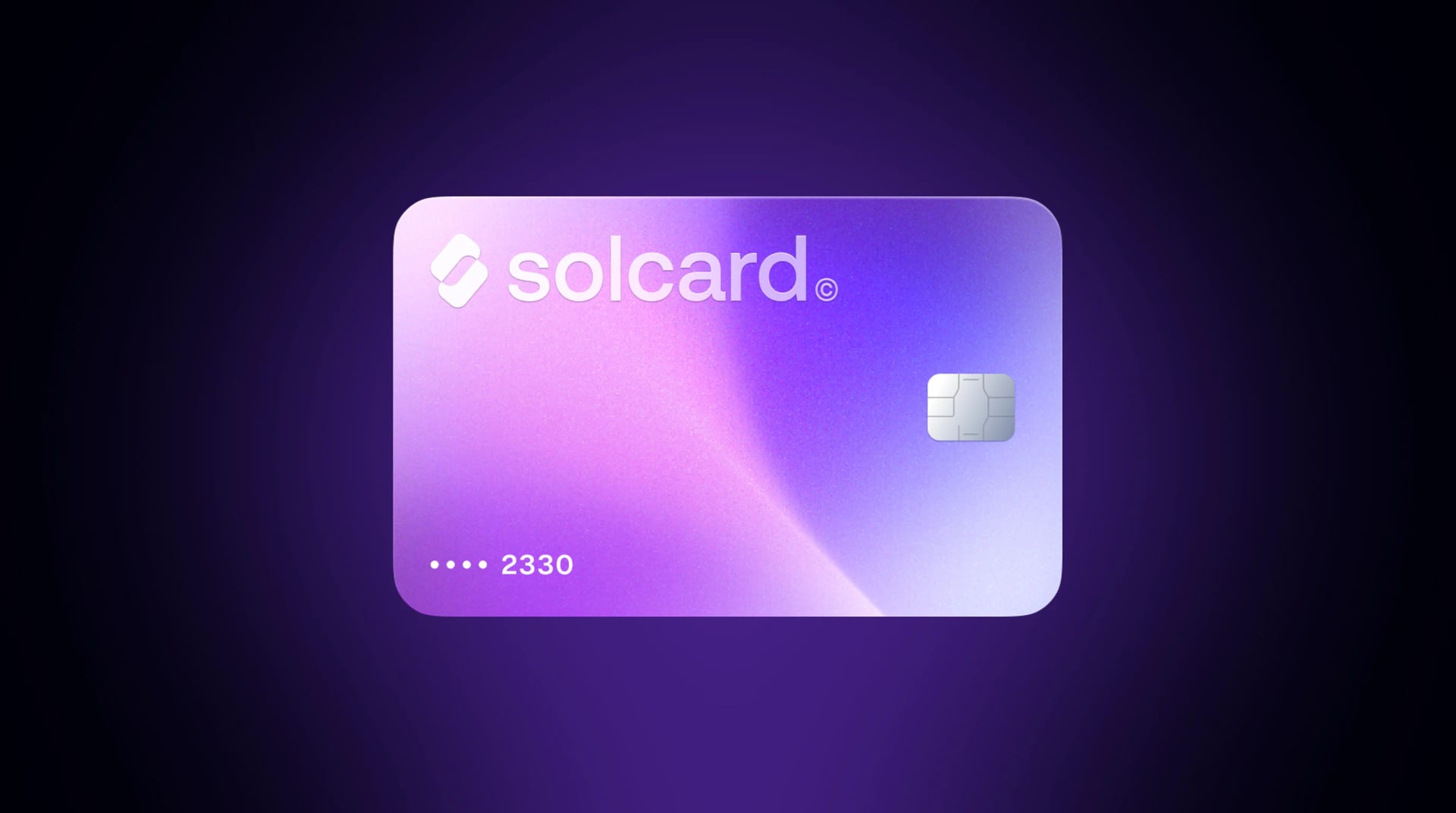
- Open a card account and get a card number issued. SolCard issues virtual cards in roughly 30 seconds.
- Top up with SOL, USDC, USDT, or SOLC across any of 9 supported networks: Solana, Ethereum, Polygon, BSC, HyperEVM, Arbitrum, Optimism, Avalanche, or Base.
- Sign in at higgsfield.ai, open your account billing settings, and choose a plan or a credit pack.
- Enter the card number, expiry, and CVV, and complete any 3D Secure prompt.
- Leave a balance on the card so the next renewal clears without you touching it.
Roughly 96% of Higgsfield authorizations on SolCard cards are approved. For context, Higgsfield reports a 95.6% authorization rate across the US, Europe, and Australia on all payment methods combined, so a crypto-funded card is not the weak link people assume.
Pros:
- Works on subscriptions and one-off credit packs, monthly or annual
- Renews automatically, so credits refill without a manual step each cycle
- Usable in 200+ countries wherever Visa and Mastercard are accepted
- The same card covers your other tools, so one top-up funds the whole stack
Cons:
- Top-up fees vary widely, and the cheapest tiers require identity verification
- FX applies if the card settles in a currency other than the charge currency
- Not available in Hong Kong
- You have to keep a buffer loaded, not just the exact plan price
| Card | Network | Top-up fee | Cost of a $59 Plus charge | Notes |
|---|---|---|---|---|
| SolCard Platinum | Visa/Mastercard | 0% | $59.00 | Physical card, Apple Pay and Google Pay, no monthly limit, 0-1.5% FX, $10 one-time issuance, identity verification required |
| SolCard Virtual | Visa/Mastercard | 5% | $61.95 | $10 one-time issuance, $5,000/mo limit, 1-2% FX |
| Bybit Card | Mastercard | ~0.9% conversion | ~$59.53 | Issuance can take days |
| Cwallet Cozy Card | Visa | ~1.8% | ~$60.06 | Instant issuance |
| RedotPay | Visa | See RedotPay's fees | Not published | Small per-transaction fee on some flows |
| Moon | Visa | 1%, $1.00 minimum | $60.00 | Some cards are single or limited use |
Those are pre-tax figures. Where VAT applies it is added at checkout and scales the same way, so the top-up percentage applies to a larger number than the sticker price.
Scale that up. On Ultra at $129/month, a 0% top-up costs $129.00 against $135.45 on a 5% tier, a gap of about $77 a year. On the $564 Plus annual charge, that gap is $28.20 in one transaction.
Both SolCard tiers carry the same one-time $10 issuance fee, so that part is a wash between them. What separates them is the running cost: Virtual costs 5% per top-up on top of the shared issuance fee, which is real money at Ultra prices, while Platinum removes the top-up fee entirely but requires identity verification. There is no cashback program on any tier.
If one card funds several AI tools, our roundup of the best AI subscriptions to pay with crypto covers the rest of the stack, and the best crypto debit cards comparison goes deeper on the providers above.
Because Higgsfield accepts stablecoins through Stripe, some checkouts show a crypto option directly. When it appears, it is the cleanest path available: no card, no intermediary.
- Start a purchase in Higgsfield billing, ideally a one-off credit pack rather than a subscription
- Look for a stablecoin or crypto option in the Stripe payment method list
- Choose USDC and the network offered, then scan the QR code or connect a supported wallet
- Send the exact amount and wait for confirmations
- Higgsfield credits your account once Stripe settles the payment
Pros:
- No card, no top-up fee, no FX spread
- Paid straight from a wallet you control
- Ideal for one-time credit-pack purchases
Cons:
- USDC only, on a limited set of networks, and not shown to everyone
- Stripe caps stablecoin transactions, ruling out large annual or team purchases
- Recurring stablecoin billing is still in limited preview, so renewals fall back to a card
- Refunds return to the originating wallet as stablecoins, complicating disputes
Treat this as opportunistic: use it when it appears, do not build a subscription around it. Our guide on how to pay with crypto covers where merchant-side stablecoin acceptance stands generally.
Sell crypto on an exchange, withdraw fiat to a bank, pay with your bank's debit card. Bank cards clear Stripe risk checks easily, but this takes 1-5 business days, stacks exchange and withdrawal fees, needs a bank in a supported country, and defeats the point of staying on-chain. A fallback, not a plan. If you have no bank at all, spending crypto without a bank account covers the card route.
Pick a tier before you fund anything. At Starter prices the fee difference is a rounding error. On Ultra, or if you buy credit packs weekly, a 0% top-up tier pays for itself inside a month.
Top up with USDC or USDT for predictable value. Size the buffer to your tax situation, not to the sticker price. In a jurisdiction where Higgsfield adds no local tax, the plan price plus roughly 10% is enough. In a 20-21% VAT jurisdiction you need the plan price plus about 30%: roughly $77 for Plus monthly, $170 for Ultra monthly, and $735 for the Plus annual charge. The buffer absorbs VAT, FX, any authorization hold, and the credit pack you will inevitably buy at 2am. Topping up with SOL converts at the market rate at deposit time, so the fiat amount that lands can differ from your estimate.
- Sign in at higgsfield.ai and open your account settings
- Go to the billing or subscription section
- Select your plan, or open the credit-pack purchase screen
- Enter the card number, expiration, and CVV
- Use a billing address that matches your card's issuing country
- Complete the 3D Secure challenge if one appears
Confirm in your card app that the charge authorized and settled, then note the renewal date. Credits do not roll over, so renewal day is the day your working pool resets and the day the card needs a balance.
Insufficient balance for the full charge. The most common failure, and almost always self-inflicted. An annual plan, an impulse credit pack, or an authorization above sticker will fail against a card funded to the exact dollar.
VAT added at checkout. Higgsfield's prices exclude VAT and local taxes. If you live somewhere that charges 20% and you funded $59 for a $59 plan, the authorization comes in near $71 and declines. Fund the tax-inclusive amount.
BIN screening. If the card is funded and declines instantly, the BIN is likely filtered. Try a different issuing program rather than retrying the same number.
3D Secure failure. Larger charges challenge more often. Confirm your provider supports 3DS and that you can receive the prompt.
Billing address mismatch. Match the address country to the card's issuing country.
Rapid retries. Repeated failures raise the risk score on every subsequent attempt. Wait, fix the cause, try once.
Currency drift. Higgsfield prices in USD. If your card settles in another currency, FX is where an apparently sufficient balance turns out to be $1.20 short.
Occasional creator on Starter. Use whatever is in front of you. At $19/month a 5% top-up is $0.95.
Working creator on Plus or Ultra. A 0% top-up card is the right call. Between the subscription and mid-cycle packs the difference compounds, and Apple Pay means no retyping a card number every time you buy credits.
Anyone buying annual. Fund the card fully, tax included, before attempting the charge and confirm 3DS works. A failed $1,188 authorization is the worst moment to learn your card cannot authenticate.
Anyone funding a whole stack from one card. Watch the monthly ceiling, not the per-charge fee. A $1,188 Ultra annual charge plus your other subscriptions and a few credit packs can crowd a $5,000 monthly limit inside a single billing cycle, and the failure mode is a declined renewal rather than a warning. Platinum has no monthly limit, which is the reason to pick it once more than one large charge shares a month. The same logic applies to studio or agency seats: whatever Higgsfield quotes you, it bills through this checkout as one authorization.
Anyone outside Higgsfield's local-payment regions. A crypto-funded Visa or Mastercard is the most direct route, since every regional method on that checkout assumes a domestic bank account.
In most jurisdictions, spending crypto is a disposal, and a disposal is a taxable event. That includes card spending: when the provider converts your balance to fiat at the point of sale, that conversion is the disposal.
Generally taxable:
- Selling crypto to fiat on an exchange before paying
- Card spending funded by a volatile asset, which carries a gain or loss against your cost basis
- Paying a merchant directly in crypto, including through Stripe's stablecoin option
Usually immaterial:
- Spending funded by stablecoins at a 1:1 peg, where the realized gain is effectively zero, though the disposal may still be reportable
Funding with USDC or USDT keeps a recurring subscription simple: no meaningful gain to compute each month. Our guide on spending crypto without tax headaches covers the record-keeping. None of this is tax advice, and rules differ by country.
Partly. Higgsfield accepts stablecoin payments through Stripe, confirmed publicly by Stripe in January 2026. In practice that is a USDC option on a limited set of networks, subject to a per-transaction cap, and it does not appear on every checkout. There is no wallet connect on the subscription flow, so a crypto-funded Visa or Mastercard remains the route that works on every plan and every renewal.
Yes, through a card. Load USDC or USDT onto a crypto card, then use it on Higgsfield's billing screen. SolCard accepts SOL, USDC, USDT, and SOLC across 9 networks including Solana, Ethereum, Base, Arbitrum, and Polygon. USDT is not part of Stripe's native stablecoin option, so USDT holders need the card route.
Starter has the smallest absolute overhead: even a 5% top-up adds only $0.95 to $19. The fee tier matters most at the top, where 0% versus 5% on Ultra is roughly $77 a year before credit packs.
Usually one of five things: not enough balance to cover the full authorization including VAT, FX on top of that, a BIN that Stripe's risk rules screened, a 3D Secure challenge the card could not complete, or a billing address that does not match the card's issuing country. Fix the cause before retrying; rapid repeat attempts make the next authorization harder to clear.
Yes. Packs are one-time charges, easier to clear than recurring ones, and the best candidate for Stripe's stablecoin option if you see it. Third-party pricing trackers report a roughly 90 day expiry on purchased credits, which we have not been able to confirm first-party, so buy against work you have actually scheduled.
Yes, if the card holds the full amount upfront and supports 3D Secure. Plus annual is about $564 and Ultra annual about $1,188 before VAT, so budget higher if local tax applies. Large single charges trigger authentication most often, and a tier with no monthly cap is safer than a $5,000 monthly limit if an annual charge and your other tools land in the same billing month.
Yes, though you will need the price from Higgsfield rather than from us. The public pricing page we checked lists individual plans only, and the third-party trackers quoting seat pricing contradict each other and the live page, so we are not going to publish a number we cannot stand behind. Whatever the quote, seats bill through the same Stripe checkout as individual plans, so a crypto-funded Visa or Mastercard works the same way. If the workspace is billed annually, the whole year lands as one authorization, which is where a tier with no monthly cap matters.
Slightly, usually. A 5% tier adds $2.95 to a $59 Plus charge; a 0% tier adds nothing beyond FX. For anyone without an international card, or anyone who would rather not off-ramp first, that spread is the price of direct access. Our comparison of crypto debit cards breaks down where the fees land.