How to Spend Cryptocurrency: 5 Working Ways (2026 Guide)
Five ways to spend cryptocurrency in 2026: crypto debit cards, direct merchant wallets, payment processors, Bitcoin Lightning, and gift cards with real fees.

In this article
There are five practical ways to spend cryptocurrency in 2026: a crypto debit card, direct on-chain wallet transfers, crypto payment processors, the Bitcoin Lightning Network, and crypto-bought gift cards. Only a crypto debit card works everywhere Visa and Mastercard are accepted (150M+ merchants worldwide).
Roughly nine in ten crypto-card dollars now settle from stablecoins rather than volatile assets (see which crypto people actually pay with and what people buy with crypto). Here is how each method works on fees, speed, verification, and coverage.
| Method | Where it works | Typical cost | Speed | Verification |
|---|---|---|---|---|
| Crypto debit card | 150M+ Visa/MC merchants | 0% to 5% top-up + 0% to 2% FX | Instant at checkout | Usually required (capped unverified tiers exist) |
| Direct wallet transfer | Crypto-accepting stores only | Network fee only | Seconds to 60 min | None |
| Payment processor (BitPay, NOWPayments) | 15,000+ integrated stores | 0.5% to 1% (often merchant-paid) | Seconds to minutes | None |
| Bitcoin Lightning | Lightning-enabled merchants (incl. Square rollout) | Under $0.01 | Seconds | None |
| Crypto gift cards | 8,000+ brands (Amazon, Uber, Walmart) | 0% to 5% markup | Instant code | Often none for small orders |
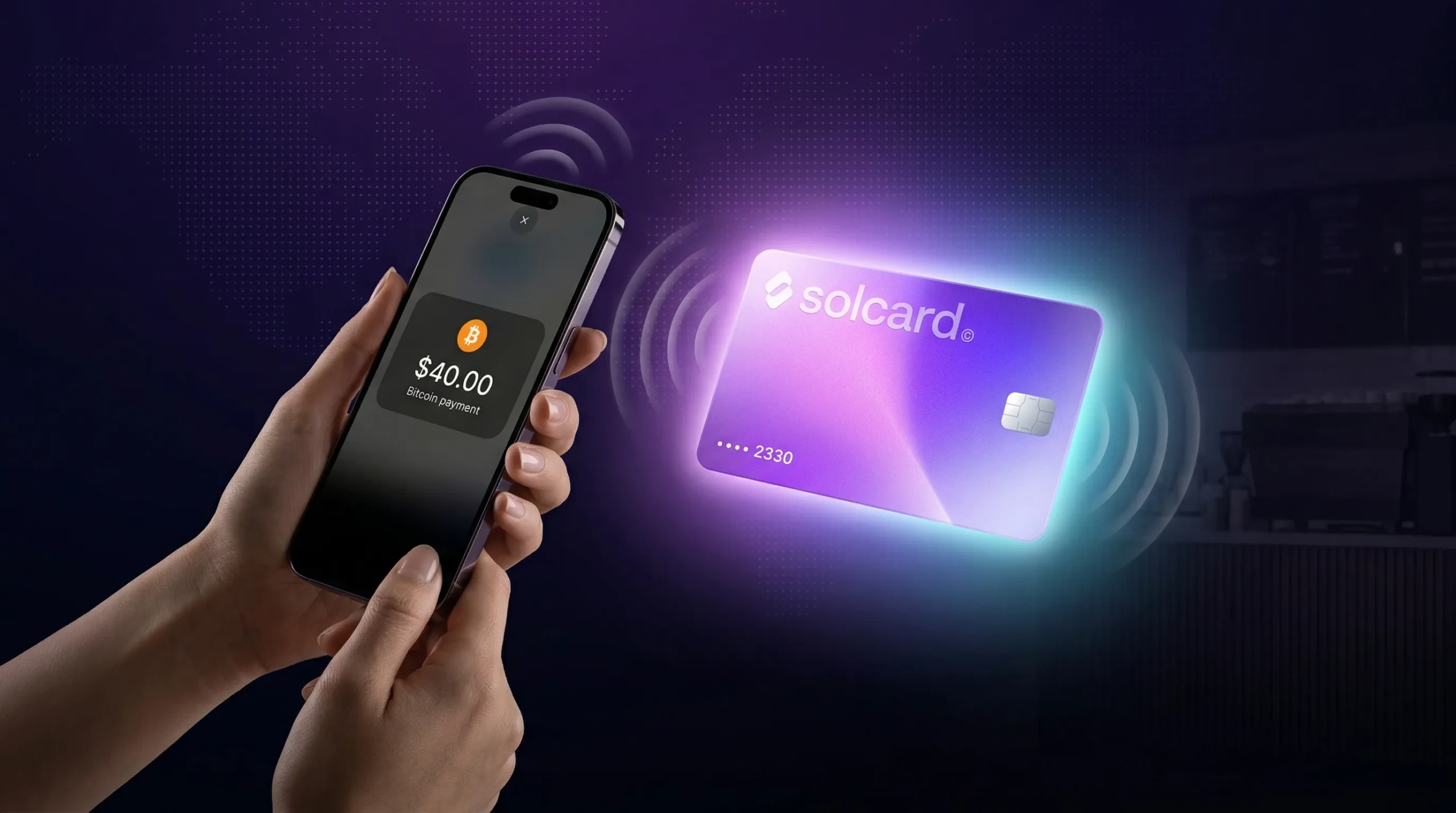
A crypto debit card converts your crypto into USD, EUR, or local fiat either when you top up or when you tap. The merchant receives an ordinary Visa or Mastercard payment and never touches a blockchain.
This is the only method that works reliably at supermarkets, restaurants, gas stations, and recurring SaaS subscriptions (see paying subscriptions with crypto). You can also add eligible verified tiers to Apple Pay or Google Pay for contactless tap-to-pay. For eight active cards compared, see our 2026 best crypto debit cards guide.
Thousands of online merchants (Shopify stores, web hosts like Hostinger, Newegg, Travala, and select luxury boutiques) accept crypto at checkout directly or through processors such as BitPay, NOWPayments, CoinGate, and Coinbase Business (which replaced Coinbase Commerce in March 2026).
You scan a QR code or connect your wallet, confirm the transfer, and the processor settles fiat to the merchant. Fees are minimal, though coverage is still a tiny fraction of everyday retail and on-chain transfers have no chargeback protection.
The Lightning Network is Bitcoin's layer-2 payment rail, settling in seconds for fractions of a cent and exceeding $1 billion in monthly volume. Square's Lightning rollout across 4M+ US point-of-sale terminals and chains like Steak 'n Shake have made direct BTC payments practical where merchants turn it on, using wallets like Cash App, Phoenix, or Breez. For a deeper look, read whether you can spend Bitcoin like cash.
Platforms like Bitrefill (8,000+ products across 180+ countries) and Coinsbee let you buy instant gift card codes for Amazon, Walmart, Uber, Apple, and Netflix with BTC, Lightning, SOL, USDC, or USDT. Gift cards skip card signups and often need no ID on small orders, though balances stay locked to one store and codes are non-refundable once delivered. See our crypto shopping guide for retailer-by-retailer options.
Four of the five methods above (crypto debit cards, direct wallet transfers, Lightning, and gift cards) skip the slow "sell on an exchange and wait 1 to 3 business days for a bank withdrawal" loop completely. If you operate without a bank account, see how to spend crypto without a bank account.
Skipping an exchange does not skip taxes
In the US and most major economies, spending appreciated crypto is a taxable disposal whether you pay via a card, Lightning, or a gift card, and brokers report cost basis on Form 1099-DA starting with the 2026 tax year. Funding your spending with USDC or USDT keeps capital gains near zero. See our crypto spending and taxes guide.
SolCard is a prepaid Visa and Mastercard card funded directly from your crypto wallet, with no bank account and no credit check. You can deposit SOL, USDC, USDT, BTC, ETH, and other supported tokens across 9+ networks including Solana, Ethereum, Base, and Polygon.
Both tiers have $0 monthly fees, a $10 one-time issuance fee per card, and a $0.30 per-transaction fee (see the SolCard fee breakdown and fees page):
- Virtual: no ID required up to $10,000/month, 5% top-up fee, 1-2% FX spread, online payments only. Available in the US and most countries worldwide.
- Platinum: identity verification required, 0% top-up fee, 0-1.5% FX spread, no monthly limit, physical and multiple virtual cards, plus Apple Pay and Google Pay. Available outside the US only.
Compare SolCard against RedotPay, Coinbase Card, or MetaMask Card.
A crypto debit card funded with stablecoins (USDC or USDT). It works online, in stores, and via Apple Pay or Google Pay without waiting for individual merchants to accept crypto.
Yes. Prepaid crypto cards, direct wallet payments, Lightning, and crypto gift cards all work straight from a self-custody wallet with no bank transfer in between.
Direct on-chain transfers on Solana, Ethereum L2s, or Bitcoin Lightning cost under $0.01 where merchants accept them. Everywhere else, a 0% top-up crypto card (like SolCard Platinum outside the US or Coinbase Card with USDC in the US) beats gift card markups.
In the US, UK, and most EU countries, yes. Spending appreciated crypto triggers a capital gains disposal. Using dollar-pegged stablecoins like USDC or USDT keeps gains near zero.
Yes, by adding an eligible verified crypto card (such as SolCard Platinum outside the US, Coinbase Card in the US, or Crypto.com Card) to Apple Wallet or Google Wallet.
Use direct stablecoin or Lightning checkouts whenever a merchant offers them for near-zero fees. For the other 99% of everyday purchases, load USDC or USDT onto a prepaid crypto card so one wallet balance covers groceries, travel, and subscriptions anywhere Visa or Mastercard is accepted.