Is SolCard Legit? An Honest 2026 Review of Fees, KYC & Safety
Is SolCard legit? An honest look at how the Solana crypto card works -- real fees, KYC tiers, safety, supported coins, and the pros and cons before you sign up.
In this article
Short answer: yes, SolCard is a real, working crypto card, not a scam. It is a Solana-native card issued on the Visa/Mastercard network that lets you spend crypto at any merchant that takes a normal card. Thousands of people use it every day: over 3,000 cardholders have paid for an X (Twitter) Premium subscription with it, and over 2,800 use it regularly on Amazon.
"Legit" is not the same as "right for you." This is an honest breakdown, written by the SolCard team, of how the card actually works, what it costs, where it falls short, and how to verify any crypto card before you trust it with your money. We have tried to be candid about the trade-offs, including the ones that might send you to a competitor.
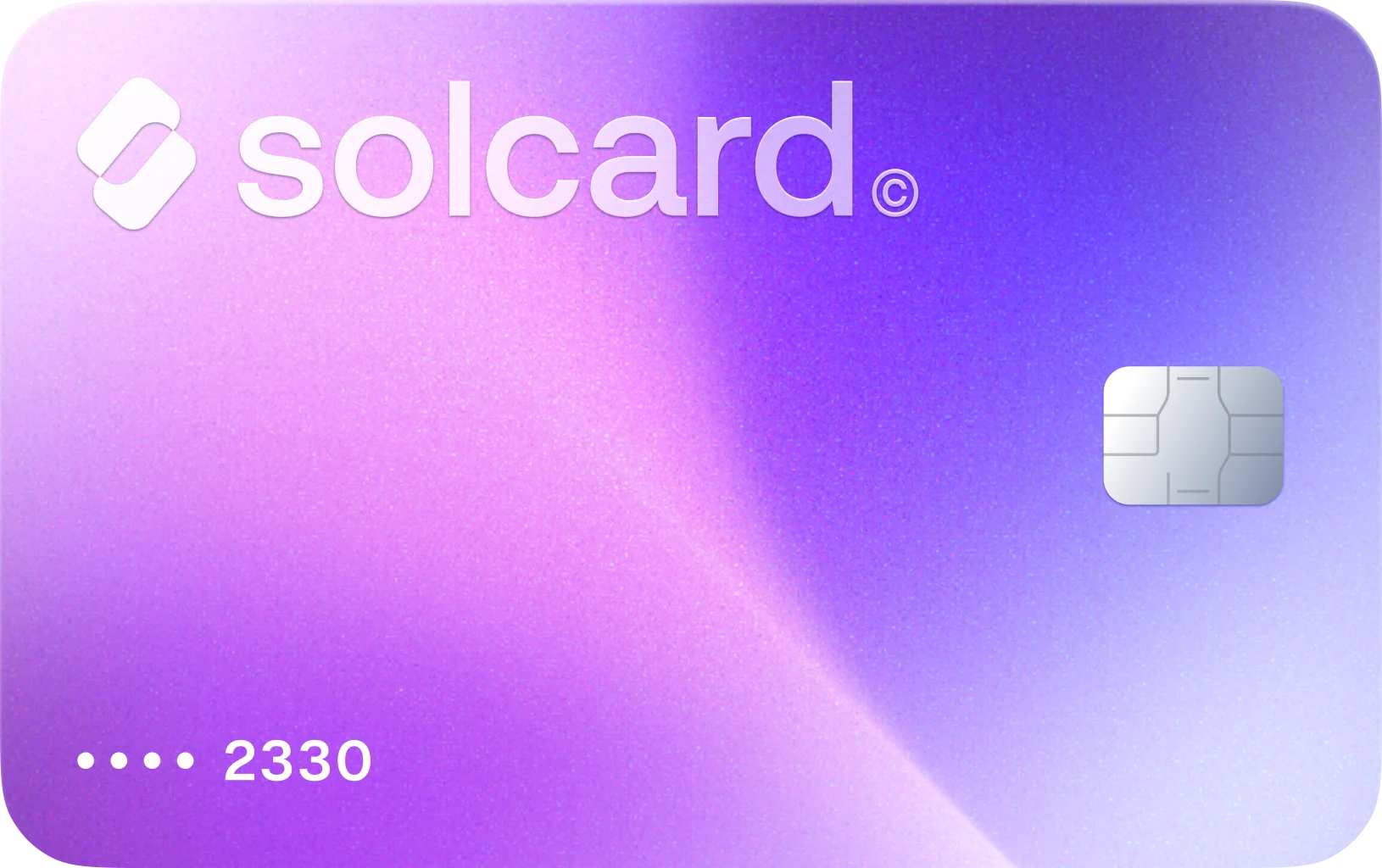
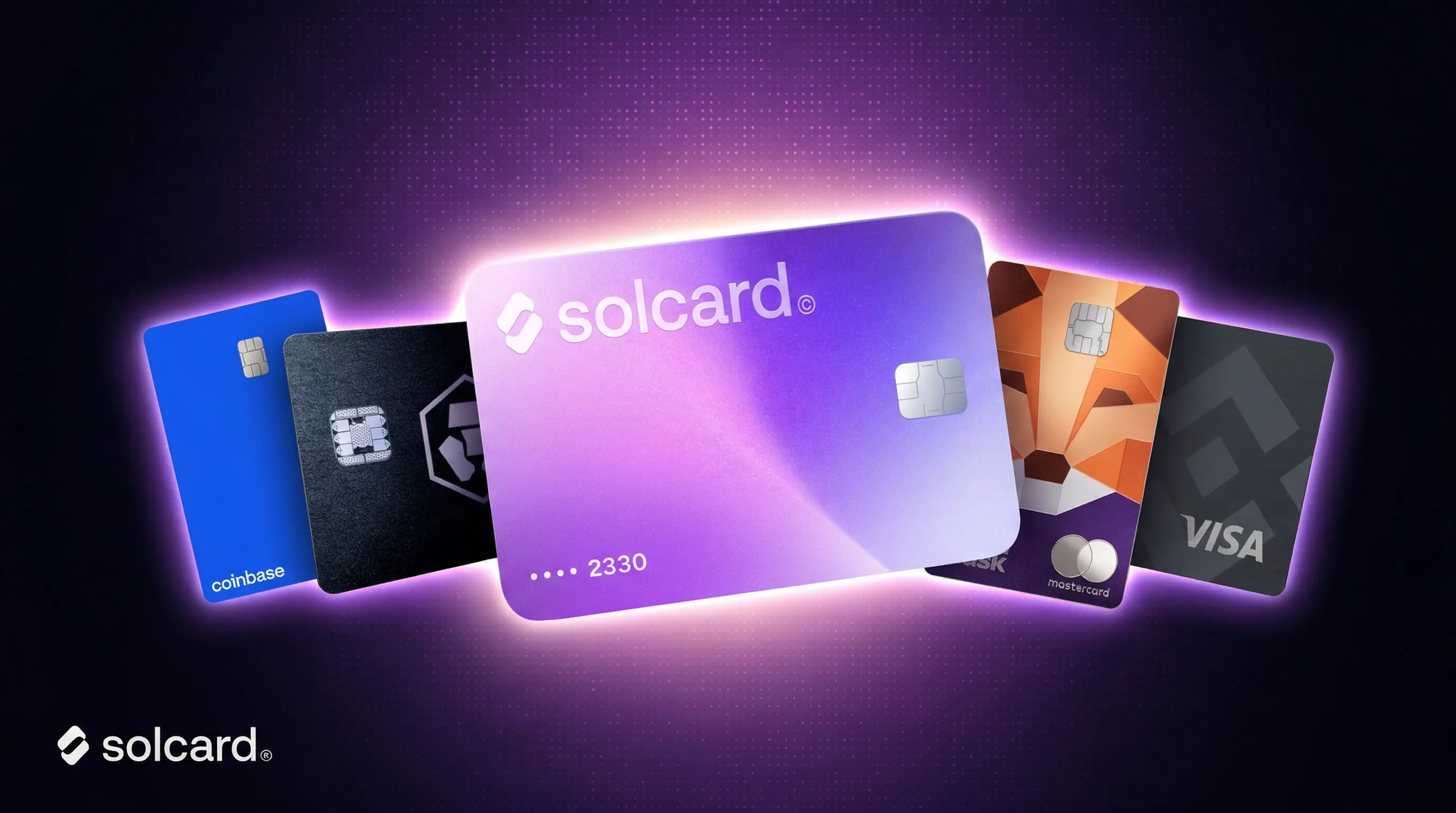
SolCard is a crypto debit/prepaid card built around Solana. You load it with crypto, and when you pay, the card converts your balance to fiat at the point of sale. The merchant sees a standard card transaction and never touches crypto.
It comes in two tiers:
- Virtual. No KYC. Issued in about 30 seconds. Carries a $10 issuance fee, a 5% top-up fee, and a $10,000/month spending limit. Best for privacy and speed.
- Platinum. Requires identity verification (KYC). No top-up fee, lower FX costs (roughly 0-1.5%), higher limits, and works with Apple Pay and Google Pay. Best for frequent, larger spending.
Supported assets include SOL, USDC, USDT, and SOLC, plus multichain stablecoins. There is no cashback program. If rewards are your priority, that is a genuine gap (more on that below).
A few things matter when you ask whether a crypto card is "safe":
- It runs on real card rails. SolCard transactions clear through Visa/Mastercard, the same networks behind your bank card, with the same fraud protections and worldwide acceptance.
- It is prepaid. You can only spend crypto you have already loaded. There is no credit line, no debt, and no way to overspend, which also limits your exposure if a card is ever compromised.
- It is in active, large-scale use. The merchant data above (X, Amazon, and many more) reflects real recurring usage, not a one-off launch spike.
What "safe" does not mean: crypto cards are not bank accounts and are not FDIC-insured. As with any crypto product, you are responsible for funding it sensibly and keeping your account credentials secure. Treat the loaded balance like cash in a wallet, not like money in a federally insured bank.
Fees are where most "is it legit" questions really come from. People want to know if they are being quietly overcharged. Here is the straight version (full detail is in SolCard's published fee breakdown):
| Cost | Virtual (no KYC) | Platinum (KYC) |
|---|---|---|
| Issuance | $10 | Varies by tier |
| Top-up fee | 5% | 0% |
| FX fee | ~1-2% | ~0-1.5% |
| Per-transaction | None | None |
| Monthly limit | $10,000 | Higher |
The Virtual tier's 5% top-up fee is high if you load large amounts. On a $20 top-up it is a dollar; on a $1,000 top-up it is $50. If you spend regularly, the Platinum tier (0% top-up) almost always works out cheaper despite the KYC step. We say this plainly in our card comparisons too: the right tier depends on how much you spend and whether privacy or cost matters more to you.
This is a real differentiator. The Virtual tier requires no identity verification, which is unusual among mainstream crypto cards and is a big reason people choose it: privacy, or living in a region where verified cards are not offered. The no-KYC tier is also popular for privacy-sensitive purchases, such as paying for OnlyFans with crypto. The trade-off is the higher fee and the $10,000/month cap. If you want the lowest fees and higher limits, the Platinum tier requires KYC, same as most competitors.
Pros
- No-KYC option that issues in ~30 seconds
- Solana-native: near-instant, sub-cent top-ups
- Works anywhere Visa/Mastercard is accepted, including Apple Pay (Platinum)
- Prepaid model means no debt and capped downside risk
Cons
- 5% top-up fee on the Virtual tier adds up on large loads
- No cashback or rewards program
- $10,000/month limit on the no-KYC tier
- Lowest fees require KYC (Platinum)
If cashback is your main goal, a card like Coinbase Card or Crypto.com may suit you better. If no-KYC issuance and Solana speed matter most, SolCard is one of the few mainstream options that delivers both.
Do not take any provider's word for it, including ours. Before trusting a crypto card, check:
- Real card-network backing. Confirm it issues on Visa or Mastercard, not a closed-loop balance.
- A published, specific fee schedule. Vague or hidden fees are the biggest red flag. Real numbers (like the table above) are a good sign.
- Working support and documentation. A real help center, responsive support, and clear KYC/limits policies.
- Independent usage signals. Active users, app store presence, and third-party discussion, not just the marketing site.
- Honest limitations. A provider that openly states what it is not good at is usually more trustworthy than one that claims to win on everything.
No. SolCard is a functioning crypto card on the Visa/Mastercard network with thousands of active users making real purchases at major merchants. It is a legitimate product, though like any financial tool you should understand the fees and limits before loading large amounts.
It depends on the tier. The Virtual card requires no KYC and issues in about 30 seconds. The Platinum card requires identity verification in exchange for lower fees and higher limits.
Yes, with the usual crypto caveats. It clears through standard card rails with normal fraud protections and is prepaid, so you cannot overspend. It is not a bank account and is not FDIC-insured, so fund it sensibly and protect your login.
The Virtual tier has a $10 issuance fee, a 5% top-up fee, and ~1-2% FX. The Platinum tier removes the top-up fee and lowers FX to roughly 0-1.5%. See the full fee breakdown for current numbers.
It is a prepaid/debit card: you spend only what you load, with no credit line or interest. People often search "crypto credit card," but no everyday-spend crypto card from SolCard extends actual credit. See what a crypto debit card is for the full distinction.
Ready to try it yourself? You can create a SolCard in about 30 seconds, no verification required on the Virtual tier, and decide based on your own experience.