How to Pay for Midjourney with Crypto: What Works in 2026
Midjourney takes cards through Stripe only: no PayPal, no crypto. How to pay for any plan with a crypto-funded virtual card, with real costs per plan.
In this article
New: a card built for Midjourney
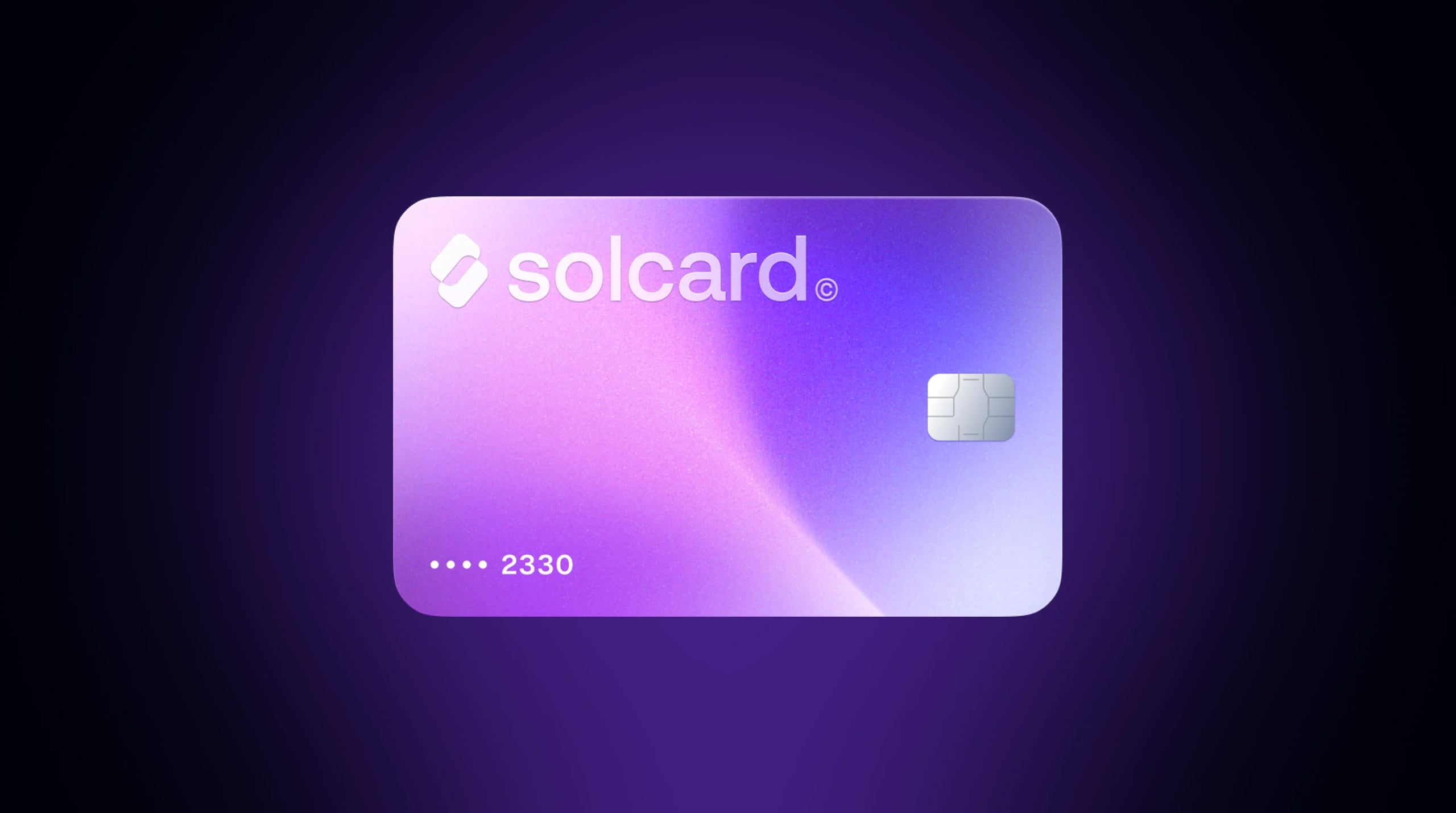
Virtual for AI & Ad Spend is a virtual card made for AI tools and ad platforms, and it is fully compatible with Midjourney. Top it up with USDT, USDC, USDG, EURC, ETH, BNB, POL, AVAX, HYPE, wBTC, wETH or SOL: $10 for the card, 5% per top-up. Get Virtual for AI & Ad Spend.
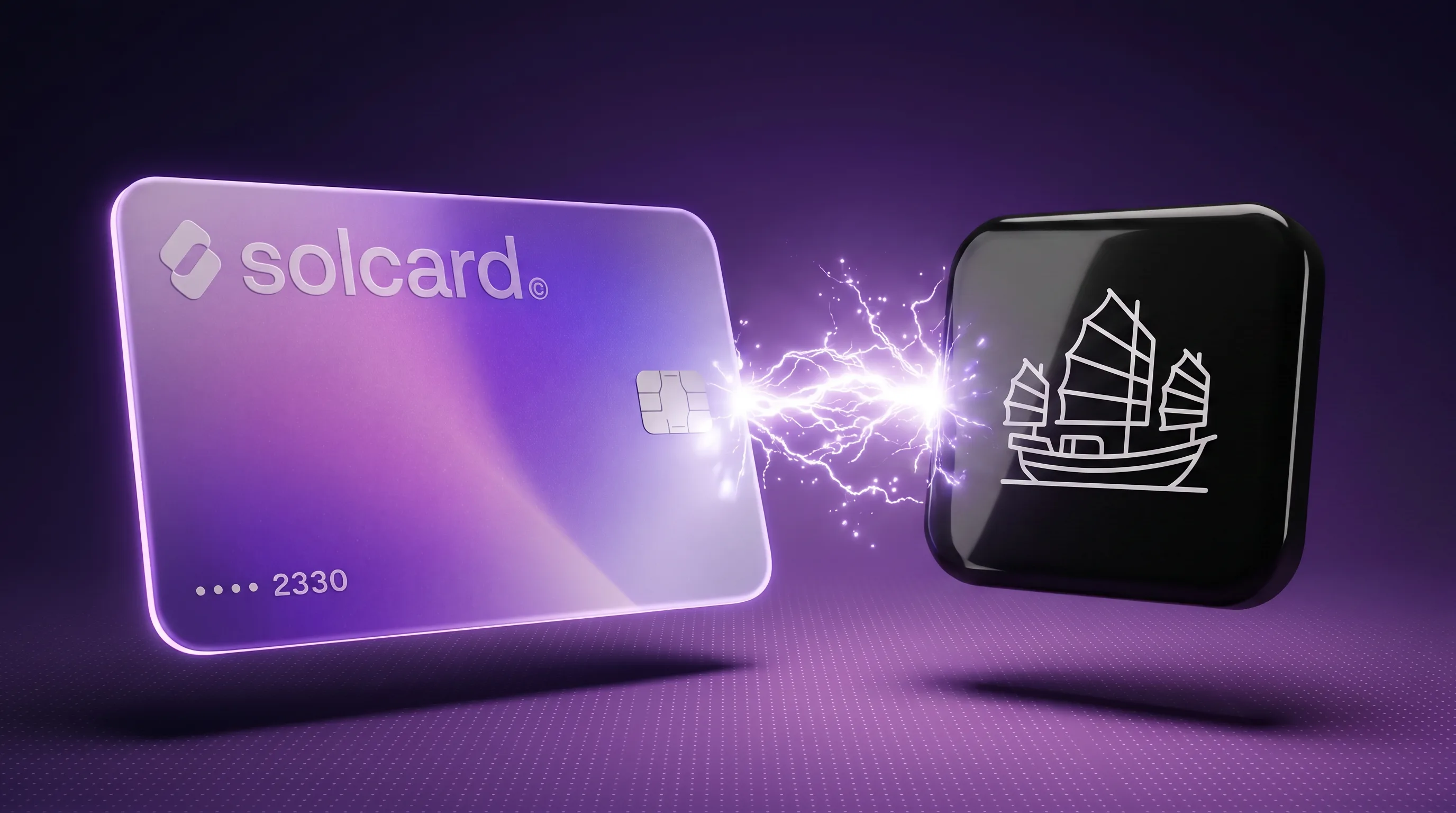
Midjourney does not accept cryptocurrency. Every subscription (Basic, Standard, Pro, and Mega) runs through a Stripe card checkout on midjourney.com, and PayPal is explicitly unsupported. If you hold USDC, SOL, or another on-chain asset, the practical fix is a crypto-funded card: your crypto converts to fiat at the moment of purchase, and Midjourney's checkout sees an ordinary Visa or Mastercard. This guide covers exactly how that works, what each plan costs once fees are included, and the billing quirks that catch people out: yearly-by-default pricing, renewal retries, auto-cancellation.
The same approach works for the other AI subscriptions in your stack, but Midjourney has a few billing behaviors of its own worth understanding before you check out.
The details matter when you are pre-funding a card. Here is the current lineup as of July 2026:
| Plan | Monthly | Annual (20% off) | What you get |
|---|---|---|---|
| Basic | $10/mo | $8/mo ($96/yr) | 3.3 Fast GPU hours/mo |
| Standard | $30/mo | $24/mo ($288/yr) | 15 Fast hours/mo + unlimited Relax |
| Pro | $60/mo | $48/mo ($576/yr) | 30 Fast hours/mo, Stealth Mode |
| Mega | $120/mo | $96/mo ($1,152/yr) | 60 Fast hours/mo, Stealth Mode |
There is no free tier. All plans work on both midjourney.com and Discord once your account is connected, and all include the current V8.1 model plus video generation.
Two details shape how much you should load onto a card:
Yearly billing is the default. Midjourney's Manage Subscription page opens on the Yearly Billing tab. The 20% discount is real, but the full year is charged upfront: $288 for Standard, not $24. Plenty of people expect a $30 charge and get hit for ten times that. If you want month-to-month, switch to the Monthly Billing tab before subscribing.
Fast hours run out. If you burn through your monthly Fast GPU time, active subscribers can buy more at $4 per hour. Those purchased hours expire after 60 days and are non-refundable, so buy what you will actually use.
Midjourney's checkout is less hostile than some AI platforms (there is no regional lockout comparable to what Claude subscribers deal with), but it has its own failure modes.
Cards only, and only through Stripe. Midjourney accepts the major card networks plus some regional wallets (Apple Pay, Google Pay, Alipay, Link, depending on where you are), all in USD. No PayPal, no wire transfer, no crypto. If cards are your problem, there is no side door.
Prepaid and low-balance cards decline. Stripe's checkout runs standard authorization checks. A card without enough balance to cover the charge (a full year at once on annual plans) fails immediately.
Failed renewals cascade. This is the one that costs people their subscription. When a renewal charge is declined, Midjourney marks the plan as Paused, retries the payment over several days, and then automatically cancels the subscription if the retries keep failing. A canceled plan means re-subscribing from scratch.
Refunds are nearly unavailable. Midjourney offers refunds only if you have used fewer than 20 GPU minutes across the lifetime of your account. Past that, the money is spent, which is what makes an accidental annual charge so expensive.
A crypto debit card converts your crypto to fiat at the point of sale. What sets this method apart for Midjourney specifically is the renewal: the card number stays live, so recurring charges bill automatically, which matters given Midjourney's pause-then-cancel behavior on failed payments.
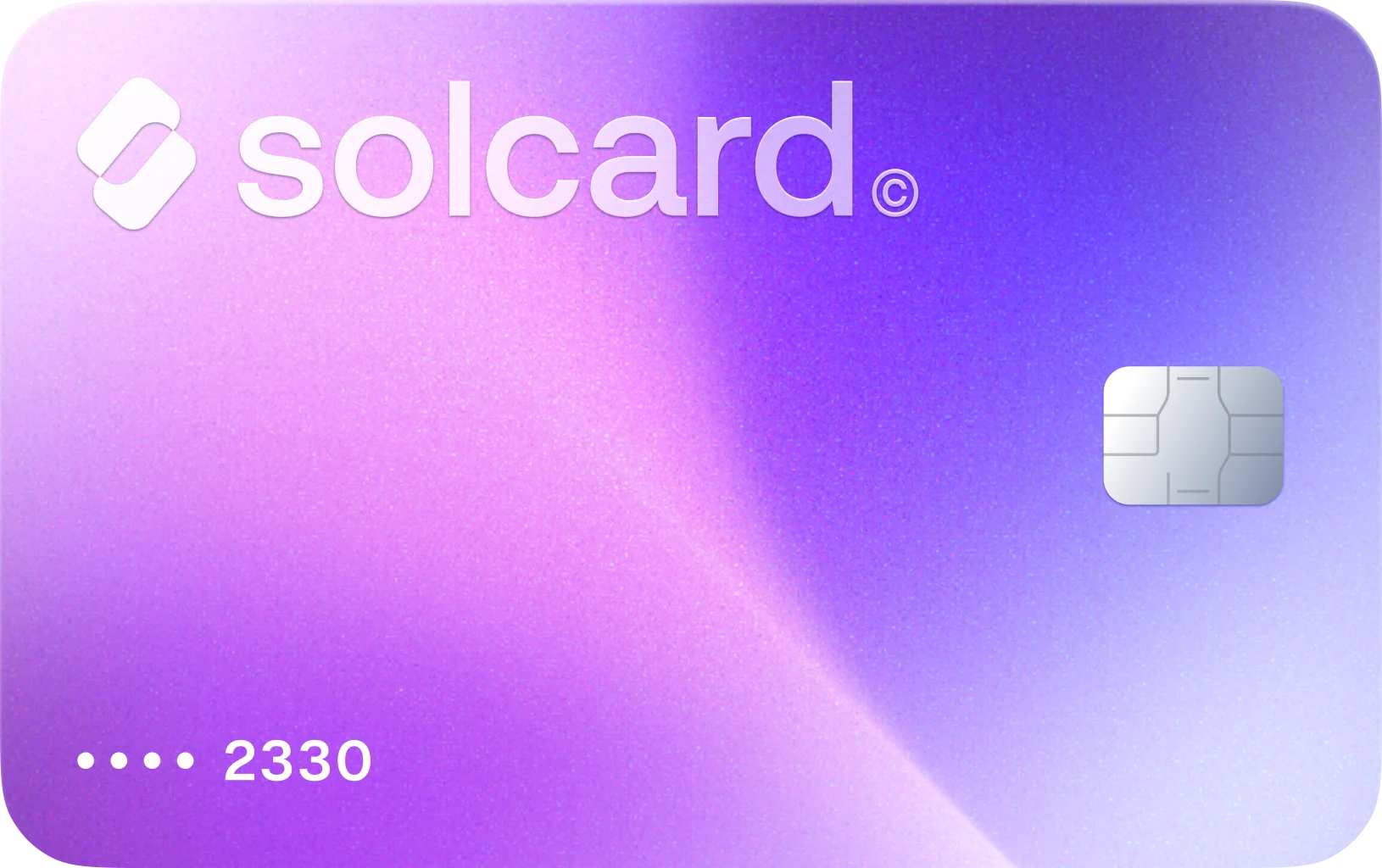
With SolCard, you can fund the card with SOL, USDC, USDT, and SOLC across 9 networks (Solana, Ethereum, Base, Polygon, and more). Issuance takes about 30 seconds, with no bank account and no credit check. Two tiers:
- Virtual: instant online card, no KYC. $10 issuance, 5% top-up fee, 1-2% FX, $10,000/month limit.
- Platinum: physical card plus Apple Pay and Google Pay, KYC required. 0% top-up fee, 0-1.5% FX, no monthly limit.
The honest trade-off: the Virtual tier's 5% top-up fee adds $1.50 to a $30 Standard payment, and $14.40 to a $288 annual charge. Platinum eliminates the top-up fee entirely but requires identity verification. If you are paying yearly or running Pro or Mega, Platinum's 0% top-up wins over time; if you want a card in about 30 seconds with no verification for a monthly Basic or Standard plan, Virtual is the simpler path.
You can sell crypto on an exchange, withdraw fiat to a bank account, and pay Midjourney with the bank's card. It works, and bank cards have the highest acceptance rate of anything.
The costs are indirect: exchange fees, a 1-5 business day withdrawal wait, the need for a bank account in the first place, and, if you are selling anything other than stablecoins, a taxable disposal. For a one-off annual purchase it is workable. For monthly billing it means repeating the whole cycle every month or leaving fiat parked in a bank, which defeats the point of keeping funds on-chain.
Services like Pay with Moon issue one-time virtual Visa numbers purchased with Bitcoin, Lightning, or stablecoins. Moon publishes a 1% fee on all purchases with a $1.00 minimum per transaction, so the floor dominates anything under $100: a $10 Basic charge costs $11.00 and a $30 Standard charge costs $31.00. The real problem for Midjourney is that single-use numbers cannot handle renewals. Your first charge succeeds, then the renewal declines and the pause-then-cancel sequence from earlier kicks in. Usable in a pinch for a single month; a poor fit for a subscription you intend to keep.
Assuming stablecoin funding (so the conversion itself is essentially 1:1):
| Plan | Sticker | SolCard Platinum (0%) | SolCard Virtual (5%) |
|---|---|---|---|
| Basic monthly | $10.00 | $10.00 | $10.50 |
| Standard monthly | $30.00 | $30.00 | $31.50 |
| Pro monthly | $60.00 | $60.00 | $63.00 |
| Mega monthly | $120.00 | $120.00 | $126.00 |
| Standard annual (upfront) | $288.00 | $288.00 | $302.40 |
| Pro annual (upfront) | $576.00 | $576.00 | $604.80 |
| Mega annual (upfront) | $1,152.00 | $1,152.00 | $1,209.60 |
| Extra Fast hours | $4.00/hr | $4.00/hr | $4.20/hr |
Assumes a USD-denominated charge: Midjourney bills in USD, and the Virtual tier's 1-2% FX fee applies only to non-USD charges. The Virtual tier also adds a one-time $10 card-issuance fee.
On a $10 Basic plan the fee difference is pocket change; on annual Pro or Mega it is $29-$58 per year. Anyone committing to annual billing or a top-tier plan should do the KYC once and take the 0% tier.
1. Get and fund the card. Issue a SolCard (about 30 seconds for the Virtual tier), then top up with USDC, USDT, or SOL. Fund for the charge you actually intend: at least ~$35 for Standard monthly, or ~$300 for Standard annual. Stablecoins keep the top-up amount predictable; volatile assets convert at the market price at top-up time.
2. Open Manage Subscription. Sign in at midjourney.com and go to the Manage Subscription page (also reachable via /subscribe in Discord).
3. Check the billing tab before you click. The page defaults to Yearly Billing; if you want monthly, switch tabs before you subscribe.
4. Complete the Stripe checkout. Pick your plan and enter the card number, expiry, and CVV like any other card payment. The charge settles in USD.
5. Confirm by email, not by the pending hold. A successful payment comes with an invoice and receipt by email. A pending hold on its own is not confirmation.
6. Keep a balance for renewals. Midjourney bills on the same date each cycle. Keep enough on the card to cover the next renewal plus a small buffer, and a little extra if you tend to buy $4/hour Fast-hour top-ups during crunch periods. Those add-on purchases hit the same card.
Paying for AI tools with crypto is now mainstream behavior, not a workaround. Per SolCard internal data covering the 90 days to July 2026:
- AI tools account for 4.9% of all SolCard card transactions, roughly 23% of spend where the merchant category is identifiable, and one of the largest named spending categories on the card.
- The average AI-tools transaction is about $51, almost triple the ~$18 average for streaming subscriptions and squarely in the range of Midjourney's Standard ($30) and Pro ($60) plans.
That $51 average tells you something about who is paying: these are not casual $10 experiments. They are working subscriptions: designers, marketers, and developers running Midjourney alongside Cursor, ChatGPT Plus, or Claude as part of a paid toolchain, and settling the bills from crypto because that is where their money already lives. For the full category breakdown, see what crypto card users actually buy.
Midjourney's billing is more forgiving than most AI platforms, but its retry-then-cancel behavior punishes neglect. A few specifics:
Use a card that supports recurring billing. This rules out single-use numbers entirely. The first charge is never the problem; the third renewal is.
Keep 3D Secure working. Stripe may step up to 3DS on some transactions. SolCard supports 3DS; if you use another provider, confirm before subscribing.
Hold a buffer above the renewal amount. An authorization can run slightly above the sticker price. An extra $5-$10 on the card avoids insufficient-funds declines on a technicality.
Do not rapid-fire retries after a decline. If a charge fails, fix the underlying cause (usually balance) and let Midjourney's own retry schedule pick it up. Hammering the checkout does nothing the retry schedule will not, and once the retries exhaust, the cancellation described earlier follows.
Watch the calendar on annual renewals. A $288-$1,152 annual renewal needs a correspondingly large balance on the card that day. Set a reminder a few days ahead.
In most jurisdictions, spending crypto is a disposal, even through a card. The saving grace for subscription payments is stablecoins: when you spend USDC or USDT, the asset's value at disposal equals what you paid for it, so the capital gain on the conversion is effectively zero. Spending appreciated SOL or ETH on a card, by contrast, is a taxable event on any appreciation, in proportion to the amount spent.
The clean pattern for recurring bills like Midjourney: top up with stablecoins, spend from stablecoins. Our guide on spending crypto without tax headaches covers the details and jurisdictional differences. This is general information, not tax advice; tax treatment varies by jurisdiction, so consult a tax professional about your situation.
Midjourney will not take your crypto, and it will not take your PayPal either: Stripe card checkout is the only door. A crypto-funded virtual card is the one method that handles everything Midjourney's billing throws at it: the upfront annual charge, automatic monthly renewals, $4/hour Fast-hour top-ups, and the retry schedule that cancels plans backed by dead card numbers. Fund it with stablecoins, keep a renewal buffer, and check which billing tab you are on before you click subscribe. For the broader mechanics of paying any merchant this way, see how to pay with crypto, or compare providers in our best crypto debit cards roundup.
Neither. Midjourney processes all payments through Stripe's card checkout and explicitly does not support PayPal; wire transfers and direct crypto payments are also unavailable. Accepted methods are major credit and debit cards plus some regional digital wallets (Apple Pay, Google Pay, Alipay, Link), billed in USD. To pay from crypto, you fund a card that Stripe treats as a normal Visa or Mastercard, which is what a crypto debit card does.
Yearly saves 20% but charges the full year upfront ($96 to $1,152 depending on plan), and it is the default tab on Midjourney's subscription page. If you are confident you will use Midjourney all year and your card tier has low fees (SolCard Platinum's 0% top-up), yearly is the better deal. If you are trying the service or funding through the 5% Virtual tier, monthly keeps each conversion small and the commitment loose.
Only if you have used fewer than 20 GPU minutes across your account's lifetime. If you qualify, the refund option appears when you cancel, and processing can take up to 10 business days. Purchased extra Fast hours are non-refundable regardless.
Fast GPU hours are Midjourney's priority compute: each plan includes a monthly allotment (3.3 hours on Basic up to 60 on Mega). Active subscribers can buy additional Fast hours at $4 per hour through the same Stripe checkout, so any card that works for your subscription works for top-ups. Purchased hours expire after 60 days, so buy for the deadline in front of you, not the quarter.
Only Pro ($60/mo) and Mega ($120/mo). Midjourney is public by default (your generations appear in the community gallery), and Stealth Mode, which keeps website creations hidden, is not available on Basic or Standard at any price. If you are generating client work or unreleased concepts, the Pro plan is the real minimum.
Midjourney marks the subscription as Paused and retries the charge over several days. If the retries keep failing, the subscription is automatically canceled and you have to re-subscribe. To avoid this, keep your card balance above the renewal amount with a small buffer, and remember that a pending hold is not a successful payment; Midjourney confirms real charges by email with an invoice and receipt.
Yes. Billing is unified: one paid plan covers both midjourney.com and Discord once your Discord account is connected. The /subscribe command in Discord simply links to the same Manage Subscription page and the same Stripe checkout, so there is no separate payment flow to worry about.
Yes. Midjourney lets you upgrade immediately and prorates the new charge based on the unused Fast time on your current plan, or you can schedule the change for your next renewal date. Immediate upgrades bill the difference to your card right away, so keep enough balance to cover it. Downgrades only take effect at the next renewal and do not refund the current term.