How to Book Flights with Crypto in 2026
Two airlines take crypto directly. Everyone else takes cards. Every airline and booking site checked against its own published page, plus a year of real flight purchases.

In this article
A small number of airlines genuinely accept cryptocurrency at checkout. As of September 2026 we can verify exactly two against their own published pages: airBaltic, which has listed crypto via BitPay for years and still does, and Emirates, which launched Crypto.com Pay for UAE residents in July 2026. A handful of booking agencies -- Alternative Airlines, Travala, Destinia -- take crypto for flights on almost any carrier.
That is the entire list. Ryanair, easyJet, Wizz Air, American Airlines, Delta, Vueling, LOT and Norwegian all publish accepted-payment lists, and crypto is on none of them.
Which is why a card matters more here than in almost any other category, and we can show that with our own data rather than argue it. Across 2,090 settled flight purchases on SolCard cards in the year to 9 September 2026, no airline or booking site accounted for more than 5% of transactions. The largest, Ryanair, was 97 purchases out of 2,090. There is no "the crypto airline" to sign up with, so the instrument has to work everywhere.
This guide covers who actually takes crypto, what airlines publish about prepaid and virtual cards, the one published rule that genuinely limits a card without plastic, who bills you and why that decides your refund, and the second charge that catches people out at the airport.
Each verdict below comes from the company's own published page, not from an aggregator.
| Company | Takes crypto directly? | Evidence |
|---|---|---|
| airBaltic | Yes | Lists "Cryptocurrencies" among alternative payment options, provided by BitPay |
| Emirates | Yes, narrowly | Crypto.com Pay at checkout, UAE residents, AED bookings only |
| Alternative Airlines | Yes | 90+ coins via xMoney, CoinGate, Crypto.com, Binance Pay, BitPay |
| Travala | Yes | 100+ coins including SOL, USDC and USDT |
| Destinia | Yes, with carve-outs | BTC, BCH, ETH, XRP, USDC, LTC and others via BitPay |
| Ryanair | No | Publishes a full list; no crypto on it |
| easyJet | No | Publishes a full list; no crypto on it |
| Wizz Air | No | Publishes a full list; no crypto on it |
| American Airlines | No | Publishes a full list; no crypto on it |
| Delta | No | Publishes a full list; no crypto on it |
| Vueling | No | Publishes a full list; no crypto on it |
| LOT Polish Airlines | No, discontinued | Accepted bitcoin in 2015; absent from the current page |
| Norwegian / Norse Atlantic | No | Both publish lists; no crypto on either |
| Booking.com Flights | No | No crypto in its terms |
| Kiwi.com | No | Publishes a list; no crypto on it |
| Expedia | No, discontinued | Accepted bitcoin 2014-2018; gone from current terms |
| Trip.com | No | Publishes a list; no crypto on it |
| Crypto-funded Visa or Mastercard | Works everywhere above | Presents as an ordinary card payment |
Two entries deserve a correction rather than a row, because the internet still repeats them:
CheapAir.com no longer exists as a flight seller. The famous 2013 bitcoin pioneer is cited in nearly every "airlines that accept crypto" listicle written since. Today cheapair.com issues a 301 redirect to CheapOair.com, a different and unrelated company; its parent was absorbed into TravelPerk and the consumer ticket business stopped. There is no bitcoin checkout there to use.
South African Airways does not accept bitcoin, and says so itself. A wave of March 2026 articles reported that it did. On 13 April 2026 SAA published a customer alert stating it "does not accept Bitcoin or any other cryptocurrency as a form of payment for tickets or services" and that "claims to the contrary being shared online originate from spam websites and are false."
This section is ours: anonymised, aggregated SolCard card transaction data covering 2,090 settled flight purchases across 818 distinct cards in the 365 days to 9 September 2026, counting only completed consumer purchases at airline and flight-agency merchants.
Most spending categories concentrate. When we looked at what crypto card users actually buy, streaming and AI subscriptions were dominated by a handful of names, so a card that worked at those few covered the category. Flights do not behave that way at all.
| Merchant | Distinct cards | Notes |
|---|---|---|
| Ryanair (all descriptors) | ~88 | Largest by transactions: 97 of 2,090 |
| Booking.com Flights (four descriptors) | ~82 | The agency bills, not the carrier |
| American Airlines (three descriptors) | ~48 | |
| Kiwi.com | 31 | |
| Delta | 17 | |
| easyJet | 14 | |
| Wizz Air, Transavia, Iberia, Vueling | Long tail | Dozens more carriers below these |
The leader has under 5% of transactions and the top ten do not approach a majority. People fly on the carrier that serves their route on their date at their price, and that is a different airline nearly every time.
The practical conclusion is the one page-1 results on this topic have an interest in not drawing. Most guides to booking flights with crypto are published by crypto-travel booking sites, which sell the booking and would like the answer to be "book through us." That works until the route you need is not in their inventory, the fare is worse, or the carrier is a low-cost airline selling direct only. Two airlines and three agencies is not coverage of a category this fragmented. A card that any of the several hundred sellers in our data already accepts is.
The category is growing quickly. Monthly settled flight transactions went from 72 in September 2025 to 229 in August 2026, and distinct cards making a flight purchase from 56 to 140 -- roughly 3x the transactions and 2.5x the people, on a base that was already live.
Two airlines are explicit, and they point in opposite directions.
Ryanair accepts prepaid cards, in writing. Alongside Visa and Mastercard credit cards, Amex, PayPal, Diners, Discover, UATP, Apple Pay and Google Pay, its payment methods page lists accepted debit cards ending with "Mastercard Prepaid." It is named on the list. Ryanair is also the single largest flight merchant in our data, which is consistent.
Delta publishes a timing rule that no other airline we checked publishes: "one-time use credit/debit cards provided by some credit card companies are permitted only if tickets are purchased at least 6 days before departure." Booking a Delta ticket on a single-use virtual card inside a week of the flight runs into that, and it is Delta's own wording, not a rumour. Delta also publishes a card-presentation rule, which the next section but one covers alongside nine other carriers.
Everyone else is silent. easyJet, Wizz Air, Vueling, Iberia, Norwegian, Norse Atlantic and LOT all publish accepted-network lists written in terms of card schemes -- Visa, Mastercard, Amex, Diners, JCB, UATP -- with no funding-type policy at all. American Airlines does not publish one either, though it markets its own gift cards as "plastic or virtual cards."
We will not fill that silence with a guess. What we can offer instead is evidence: 2,090 completed flight purchases on crypto-funded cards across 818 cards in a year, spread across those same carriers. Those are settled authorizations, not a policy claim.
When an airline publishes nothing about prepaid cards, that is silence, not rejection. Anyone quoting you a definitive rule for easyJet or Wizz Air is quoting something those airlines never wrote.
Every carrier we checked gates part of its payment menu by country. Wizz Air restricts iDEAL to Dutch bank accounts, Przelewy24 to Polish ones, and Trustly to customers "with a billing address in United Kingdom, Denmark, Norway, Sweden, Finland, Estonia, Latvia, or Lithuania." LOT states plainly that "the availability of individual payment methods varies depending on the country in which you are making your booking." Norwegian sets card surcharges by the card's issuing country. Even the two crypto options are gated: Emirates to UAE residents on AED bookings, airBaltic to "select markets, depending on the customer's country of residence."
None of that has anything to do with how a card is funded. It is jurisdiction. A crypto-funded Visa or Mastercard clears the card-network path everywhere those carriers sell tickets, but it does not change what country your card is deemed to come from, and it will not unlock a country-gated local method.
Airline checkouts also trigger 3-D Secure step-ups more often than most online merchants, because tickets are high-value and cross-border. On a SolCard card the challenge arrives by email rather than by SMS: we send your registered account address a Transaction Confirmation carrying either a one-time code to enter on the merchant's screen or an authentication link to open. Codes are short-lived, so book from a device where you can open that mailbox. As the next section shows, clearing 3-D Secure can also do more than approve the payment.
If one thing on this page should change your choice of card, it is this, and it has nothing to do with crypto. A number of airlines reserve the right to make you present, at the airport, the physical card that paid for the ticket, usually with photo ID, before you get a boarding pass. It is an anti-fraud measure aimed at stolen cards and third-party bookings, it long predates crypto cards, and it applies identically to any card without plastic. We checked carriers' own published terms; ten publish a version of it:
| Airline | What it publishes | Mandatory or conditional |
|---|---|---|
| AirAsia | If the passenger is not the cardholder, "the cardholder is required to present the relevant physical credit card and official photo identification at the airport check-in counter before departure" | Mandatory when passenger is not the cardholder |
| SpiceJet | For foreign cards, "the card must be produced for physical verification at the airport check-in counter"; otherwise "SpiceJet will be constrained to refuse boarding" | Mandatory for non-Indian cards |
| China Airlines | "the Passenger shall present the credit card that was originally used for the corresponding purchase at the check-in counter" | Mandatory on its own-website bookings |
| Emirates | In some countries the cardholder must be a traveller and "will be required to show the actual credit card at the airport check-in counter prior to receiving boarding passes" | Mandatory where it applies, by country |
| EVA Air | Must present the card at check-in when the payment was not authenticated by 3-D Secure | Conditional on 3-D Secure |
| Cathay Pacific | "You may be asked to present the physical credit card(s) charged for the tickets for verification purpose upon check-in" | Conditional, waived if 3-D Secure clears |
| Qatar Airways | "we may require you to present the credit card used to purchase the Ticket at the time of airport check-in" | Conditional |
| Scoot | "You may also be required to produce any credit card used in making the Booking" | Conditional |
| IndiGo | Where the cardholder is not travelling, an attested photocopy of the card front is required at check-in | Conditional |
| Delta | "the purchaser may have to show us the credit/debit card along with a valid photo ID", varying by the card's billing address and country of travel | Conditional |
We could not confirm it for Cebu Pacific, VietJet or Jetstar. All three are widely claimed to have such a rule; none of it appeared on a page those airlines currently publish, so we are not going to state it. Booking.com and Trip.com publish no card-presentation rule for flights at all.
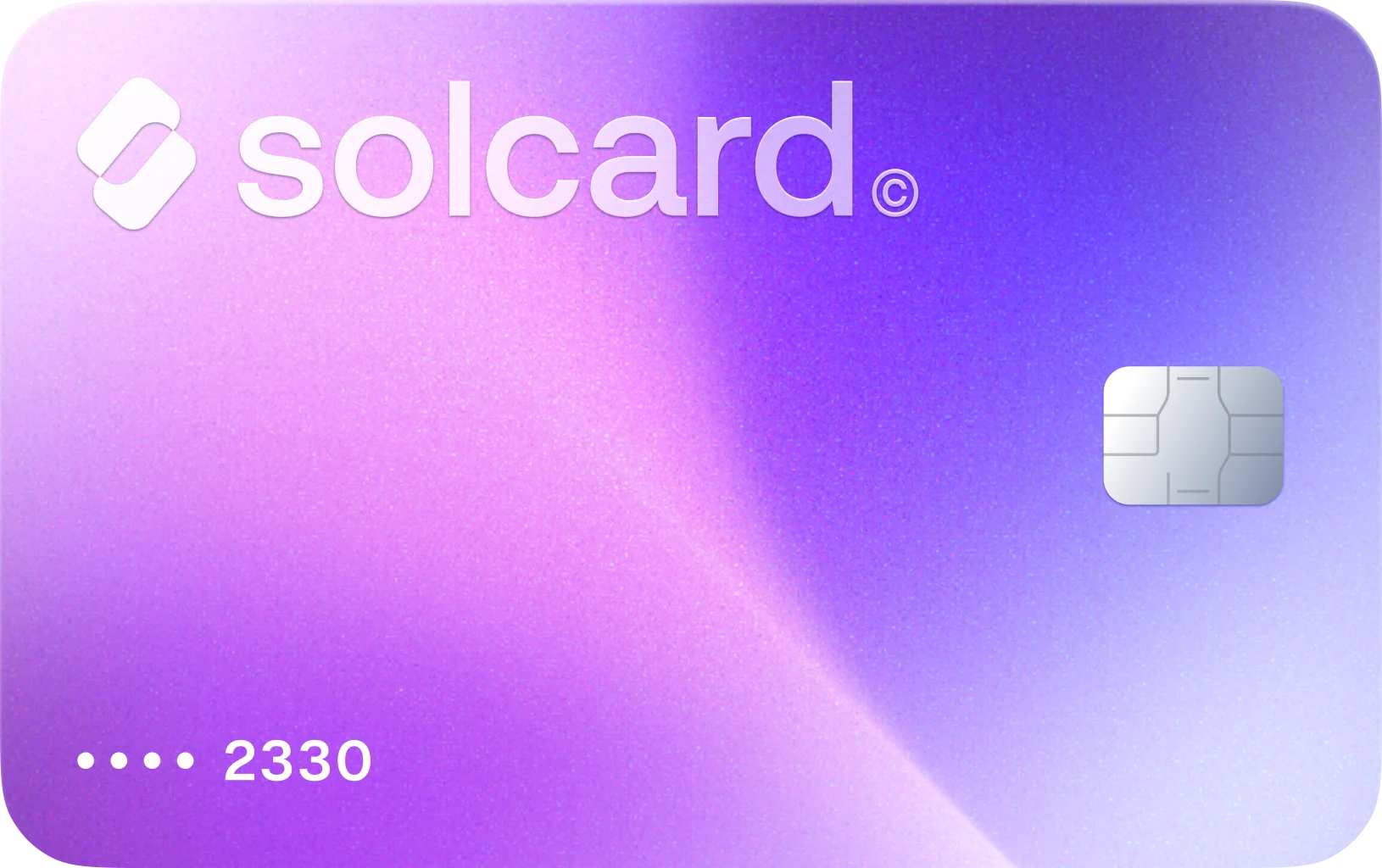
The first thing that follows is a limitation on our own product. SolCard does not issue a plastic card on either tier. If you fly a carrier that invokes this rule, there is no card to hand over. The published fallbacks are survivable -- AirAsia lets you pay again by another card or cash, Qatar Airways takes a cash or alternative-card "guarantee payment", China Airlines expects you to buy another ticket on the spot -- but every one means paying twice and reclaiming later. If you regularly fly the carriers in that table, that is a genuine argument for keeping a plastic card for the booking itself. We would rather say so than pretend the rule does not exist.
The second is that clearing 3-D Secure is the documented way out, on the airlines that say so. Cathay Pacific states the requirement falls away when the payment is authenticated by Verified by Visa or Mastercard SecureCode, and EVA Air ties it specifically to transactions that were not 3-D Secure authenticated. On those two carriers, completing the confirmation step at checkout is not just friction -- it is what stops a counter asking for a card you do not have.
One wrinkle if you book through an agency: Kiwi.com pays airlines with its own card, not yours. Its help pages tell customers a copy of Kiwi's payment card should be attached to the e-ticket, and that if an airline will not accept the copy and asks you to pay again, you should do so and claim the refund back. That is an agency acknowledging in writing that a card the passenger cannot physically produce is a live problem at airline counters -- and if you booked through one, the card in question may not even be yours.
This is the single most useful thing on your statement and almost nobody explains it. Book on an airline's own site and the airline bills your card. Book through an agency and the agency usually bills your card, then buys the ticket. Both produce a seat on the same aircraft, and completely different situations if something goes wrong.
Our first-party data shows the distinction cleanly, because the two shapes look different on a statement:
| Descriptor shape | Who billed you | What it means |
|---|---|---|
RYANAIR HEAD OFFICE Dublin IRL | The airline | Booked direct with Ryanair |
RYANAIR INFLIGHT Dublin IRL | The airline | A separate onboard purchase, same carrier |
AMERICAN AIRLINES Fort Worth USA | The airline | Booked direct |
DELTA INTERNET DELTA.C Atlanta USA | The airline | Booked on delta.com |
EASYJET Luton GBR | The airline | Booked direct |
BKG*BOOKING.COM FLIGHT Amsterdam NHNL | The agency | Booking.com's flights product billed you |
FLIGHTS ON BOOKING.COM Amsterdam NLD | The agency | Same product, second descriptor shape |
KIWI.COM Brno CZE | The agency | Kiwi.com billed you, not the carrier |
Booking.com's own terms make the agency case explicit. Its flights product is supplied through what it calls a "Third-Party Aggregator" (Booking Holdings has publicly named Etraveli Group), and the terms state that "your payment will be organized by us, by the Third-Party Aggregator (or a party specified by them), or by a third party such as an airline." You end up with two relationships: an intermediation contract with the aggregator for the ticket, and a contract of carriage with the airline for the flight. Alternative Airlines is similarly direct about being the ticketing agent, and states that if an airline goes bust it is not responsible for refunding money already paid, though it will pass on any refund it receives.
What this means for you. If the descriptor names the airline, the airline is your counterparty for a refund or a change. If it names an agency, the agency is, and the airline will generally send you back to whoever issued the ticket. Match the descriptor before you spend an afternoon on the wrong support line.
Two names never bill you at all: Skyscanner takes no payment, stating that you "will be redirected from our website and will then deal directly with the relevant travel provider," and Google Flights calls itself "an intermediary only" outside its Book on Google flow. If you searched on either, look at what actually charged you.
Here is the second original finding, and it is the one to act on.
42% of the flight purchases in our data settled under $100. The full distribution:
| Ticket size | Share of flight purchases |
|---|---|
| Under $100 | 42% |
| $100 - $299 | 21% |
| $300 - $699 | 19% |
| $700 - $1,499 | 10% |
| $1,500 and above | 7% |
Average ticket was about $448, but the median was $167. That gap is the whole story: a small number of long-haul fares pull the average far above a typical purchase.
Part of that 42% is what you would expect -- European low-cost fares, where a Ryanair or Wizz Air seat genuinely costs less than dinner. But a meaningful part of it is not tickets at all. It is ancillaries: seat selection, checked bags, priority boarding, onboard purchases. RYANAIR INFLIGHT Dublin IRL alone accounts for 39 transactions across 26 cards, entirely separate from the same airline's booking descriptor.
Booking is rarely the last charge on a flight. A bag fee at the airport desk, a seat you pay for at online check-in twenty-four hours out, a coffee at 30,000 feet -- these land days or weeks after the ticket, on the card already in your wallet or saved in the airline's app.
It is the same hazard we wrote about for paying for Airbnb with crypto, where split payments charge the original card weeks later. The flight version is easier to forget, because nobody emails you a payment schedule for a bag. Unlike Airbnb, we found no airline publishing a rule that ancillaries are automatically re-charged to the booking card -- Vueling publishes a separate, narrower payment-methods table for post-booking extras, implying a fresh checkout. So the mechanism is usually "you pay again," not "they charge you again." That is better, but only if the card still has money on it.
The rule for a load-then-spend card is simple: fund past the fare. Add the cost of the bag you already know you are checking, plus the seat, plus a buffer. A card that was emptied to the cent by the ticket is a card that cannot pay for a bag at a Ryanair desk, where the alternative is significantly more expensive than doing it online.
SolCard issues cards you top up with SOL, USDC or USDT across nine or more networks -- Solana, Ethereum, Base, BSC, Arbitrum, Polygon and Avalanche among them -- and the balance converts to fiat at the point of sale. An airline checkout sees an ordinary card payment on a network it already lists.
| Virtual | Platinum | |
|---|---|---|
| Network | Mastercard only | Visa or Mastercard |
| Identity verification | Not required | Required |
| Issuance fee | $10 | $10 |
| Top-up fee | 5% | 0% |
| Monthly spending cap | $10,000 | None |
| FX | 1-2% | 0-1.5% |
| Apple Pay / Google Pay | Not supported | Both supported |
| Annual fee | None | None |
| Per transaction | $0.30 | $0.30 |
The top-up fee does not settle this one, and we are not going to pretend it does. When we looked at paying for Airbnb with crypto, the average booking was around $650 and a 5% top-up cost about $32 -- enough that the 0% tier paid for itself on a single stay. Flights are a different shape. The median flight purchase here is $167, where a 5% top-up is about $8, and 42% of purchases are under $100, where it is under $5. If your flying is European low-cost hops and the odd bag fee, the fee difference is genuinely small and the no-verification tier is a reasonable choice.
The fee argument only reappears at the top of the distribution. On a $1,200 long-haul fare a 5% top-up is $60, and on the 7% of purchases at $1,500 or more it is $75 and up. One intercontinental ticket a year is where 0% starts to matter.
The honest Platinum arguments on flights are the other two rows of that table. The $10,000 monthly cap can bind at the very top, for a family booking long-haul together in a month of other spending. And Apple Pay and Google Pay are Platinum-only, while Ryanair, easyJet, Vueling, Iberia and American Airlines all accept one or both -- on a phone at an airport, a wallet payment beats typing sixteen digits one-handed. Setup is in our guide to using Apple Pay with a crypto card.
Card network is the point in Virtual's favour. Every airline we checked accepts both Visa and Mastercard, so either tier transacts. But Ryanair names "Mastercard Prepaid" on its accepted list, which is precisely what the Virtual tier is, and that is useful to have in writing at the largest merchant in our data.
Honest limitations, stated plainly:
- Neither tier gives you plastic to present at a counter. On the ten carriers listed above this is a real limitation, not a footnote, and the fallback is paying twice and reclaiming.
- Virtual requires no identity verification; Platinum does. On low-value fares that trade is defensible on the numbers. On a $1,400 ticket it is not.
- The $10,000 monthly cap can bind at the very top. A single $1,500 fare fits comfortably. A family of four on long-haul plus a month of ordinary spending can press against it.
- A card does not change what country you are deemed to be booking from, and neither tier is a credit product. You spend what you have loaded, which is exactly why the bag-fee section matters.
- Decide direct or agency first. Direct means the airline is your counterparty for changes and refunds. An agency may be cheaper on a multi-carrier route, but then the agency is. On a route you might need to change, direct is usually worth a small premium.
- Get the card and top it up. Fund with SOL, USDC or USDT on whichever supported network is cheapest at the time.
- Load past the fare. Fund against the final total at checkout -- taxes, carrier charges, any seat or bag you already know you want -- not the headline fare, then add a buffer for the ancillaries that come later.
- Check the currency you are charged in. Paying in the fare's own currency avoids the merchant's conversion. Your card's FX is the layer you control by tier: 1-2% on Virtual, 0-1.5% on Platinum.
- Have your account email open while you pay. Airline checkouts ask for a 3-D Secure confirmation more often than most sites, it arrives by email, and it is short-lived. On Cathay Pacific and EVA Air, clearing it also removes the card-presentation requirement at check-in.
- Note the descriptor once it appears on your statement. That string tells you whether the airline or an agency is your counterparty.
- Top up again before check-in. Seats and bags are cheapest at online check-in and most expensive at the airport desk. Both need a funded card.
Travelling further with the same card: our guides to booking hotels with crypto and buying an eSIM with crypto cover the two charges that usually bracket a flight. The wider travel merchant directory has per-merchant pages including Delta and Booking.com, and if you are new to spending crypto at a card checkout, start with how to pay with crypto.
Yes, by two different routes. A small number of sellers take cryptocurrency directly at checkout: airBaltic accepts crypto via BitPay, Emirates launched Crypto.com Pay in July 2026 for UAE residents booking in AED, and the agencies Alternative Airlines, Travala and Destinia accept a wide range of coins through processors such as xMoney, CoinGate, Binance Pay and BitPay. Every other major airline and booking site -- Ryanair, easyJet, Wizz Air, American Airlines, Delta, Vueling, LOT, Norwegian, Booking.com, Kiwi.com, Expedia and Trip.com -- publishes an accepted-payment list with no crypto on it. For those, the working route is a card funded with crypto that converts to fiat before the airline is charged, so the checkout processes an ordinary card payment.
Verified against the airlines' own published pages: airBaltic, which lists "Cryptocurrencies" among its alternative payment options provided by BitPay, restricted to select markets by country of residence and to Economy BASIC and Economy CLASSIC fares; and Emirates, which announced on 28 July 2026 that customers "can now select Crypto.com Pay at checkout," for eligible UAE residents on bookings priced and settled in Emirati Dirham. LOT Polish Airlines accepted bitcoin in 2015 but it is absent from its current payment page, and South African Airways published a statement on 13 April 2026 explicitly denying press reports that it accepts bitcoin. Beyond those, we found no airline with a live, company-published crypto checkout.
It depends on the airline, and most publish nothing either way. Ryanair is the clearest yes: its payment methods page lists "Mastercard Prepaid" among accepted debit cards. Delta publishes the clearest condition: "one-time use credit/debit cards provided by some credit card companies are permitted only if tickets are purchased at least 6 days before departure." easyJet, Wizz Air, Vueling, Iberia, Norwegian and LOT publish accepted card networks with no funding-type policy at all. Rather than guess at that gap, we can offer data: 2,090 flight purchases settled on SolCard cards across 818 distinct cards in the year to 9 September 2026. The separate question of whether an airline will ask you to show the card at the airport is covered below, and that one is a genuine limitation for a card with no plastic.
They solve different problems. A crypto-native booking site takes your coins directly, which is convenient if your route is in its inventory at a fare you like. A card works at any airline or agency taking Visa or Mastercard, which is effectively all of them. Our data is the argument for the card: across 2,090 flight purchases, no single merchant exceeded 5% of transactions. On price, compare the actual totals -- the crypto site's fare plus its spread against the direct fare plus your card's top-up and FX. Note that most articles ranking on this question are published by crypto booking sites, which sell the booking. We do not.
Ryanair, but by a small margin, and that is the interesting part. In the 365 days to 9 September 2026 it was the largest single flight merchant in our data, with 97 transactions out of 2,090 across roughly 88 distinct cards. Booking.com's flights product followed at about 82 distinct cards across four descriptors, then American Airlines at about 48, Kiwi.com at 31, Delta at 17 and easyJet at 14, with a long tail of Wizz Air, Transavia, Iberia, Vueling and dozens more below. No merchant reached 5% of transactions, which is exactly why the payment instrument has to work everywhere rather than at one partner.
The average settled flight purchase was about $448 and the median $167 -- a gap that tells you the distribution is skewed by a small number of long-haul fares. In full: 42% of purchases were under $100, 21% between $100 and $299, 19% between $300 and $699, 10% between $700 and $1,499, and 7% were $1,500 or above. The large share under $100 is a mix of European low-cost fares and airline ancillaries -- bags, seats and onboard purchases -- which are separate charges from the ticket.
You cannot pay them, and they are frequently charged after the booking. Seats and checked bags are usually paid at online check-in, roughly twenty-four hours before departure, and onboard purchases later still -- our data shows Ryanair's inflight descriptor alone accounting for 39 transactions across 26 cards, separate from its booking descriptor. No airline we checked publishes a rule automatically re-charging the card used at booking, so these are usually a fresh checkout; Vueling even publishes a separate, narrower payment-methods table for post-booking extras. Either way, a load-then-spend card needs a balance at check-in, not just at booking, and airport desk prices for a bag are considerably higher than online ones.
Because the agency billed you, not the carrier. Two descriptor shapes appear in our data for Booking.com's flights product -- BKG*BOOKING.COM FLIGHT Amsterdam NHNL and FLIGHTS ON BOOKING.COM Amsterdam NLD -- alongside KIWI.COM Brno CZE for Kiwi. Booking.com's terms describe its flights product as supplied through a "Third-Party Aggregator" and state that "your payment will be organized by us, by the Third-Party Aggregator (or a party specified by them), or by a third party such as an airline," leaving you with an intermediation contract for the ticket and a contract of carriage with the airline. That decides who handles a refund or a change. When the descriptor names the airline -- RYANAIR HEAD OFFICE Dublin IRL, DELTA INTERNET DELTA.C Atlanta USA, EASYJET Luton GBR -- the airline is your counterparty.
Some do, and it is the one published rule that genuinely limits a card with no plastic. Ten carriers publish a version of it in their own terms. AirAsia requires a non-cardholder's card and photo ID "at the airport check-in counter before departure." SpiceJet requires foreign cards to "be produced for physical verification at the airport check-in counter." China Airlines states the passenger "shall present the credit card that was originally used." Emirates requires it in some countries "prior to receiving boarding passes." Qatar Airways, Cathay Pacific, Scoot, IndiGo, EVA Air and Delta publish conditional versions. We could not confirm the rule for Cebu Pacific, VietJet or Jetstar despite it being widely claimed, so we do not state it for them. Published fallbacks generally mean paying again by another card or cash and reclaiming later. Notably, Cathay Pacific and EVA Air both drop the requirement when the payment was authenticated by 3-D Secure at checkout.
Not directly at almost any airline. Of the direct-crypto sellers, Travala lists USDC and USDT among 100+ supported coins and Destinia lists USDC, so a booking through those is possible in stablecoins. Airlines themselves do not take them: airBaltic's crypto option runs through BitPay and Emirates' through Crypto.com Pay, both scoped by country. The route that works at any airline is to load USDT or USDC onto a card -- SolCard supports both, plus SOL, across nine or more networks -- and let the balance convert to fiat at the point of sale, so the airline processes an ordinary Visa or Mastercard payment and never sees a stablecoin.